 HeatPumpPath
Thermal Storage and Heat-Pump Load Shifting
Understand how stored heat may shift some heat-pump electricity use and what to ask about comfort, hot water, controls, and local rates.
In this guideJump to a section
Thermal storage can let a heating system use some electricity at one time and deliver the stored heat later. A hot-water tank is one familiar example; some heat-pump projects also study dedicated thermal stores and predictive controls. This is called load shifting. It changes when electricity is used, but does not by itself reduce the total energy a home needs or guarantee a lower bill.
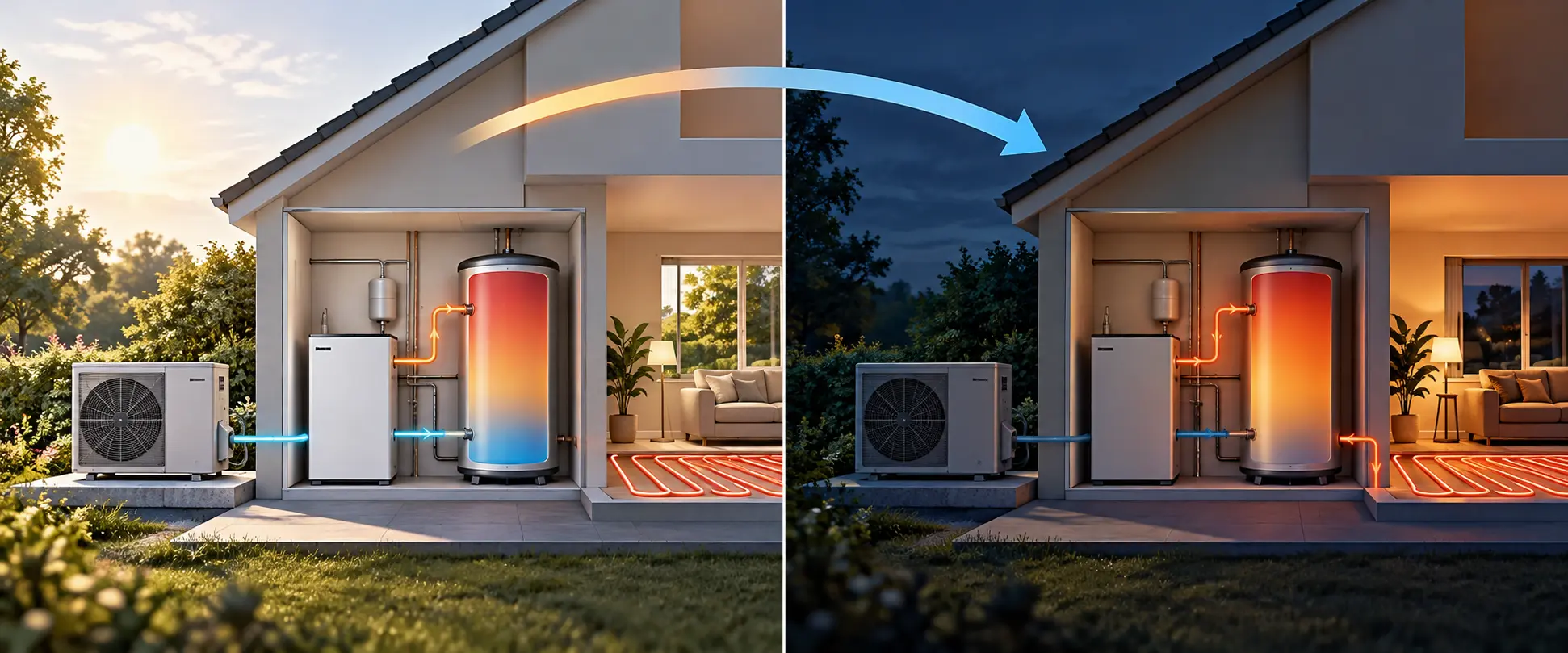
Illustrative sequence only: whether heat can be stored and used later depends on the installed system, controls, weather, and household demand; shifting does not guarantee lower energy use or cost.
Thermal storage is different from an electrical battery. A battery stores electricity and can supply electrical loads only when the equipment is designed and connected for that purpose. A thermal store holds heat. It cannot power a heat pump during a grid outage, and it does not establish that a home’s electrical service is adequate.
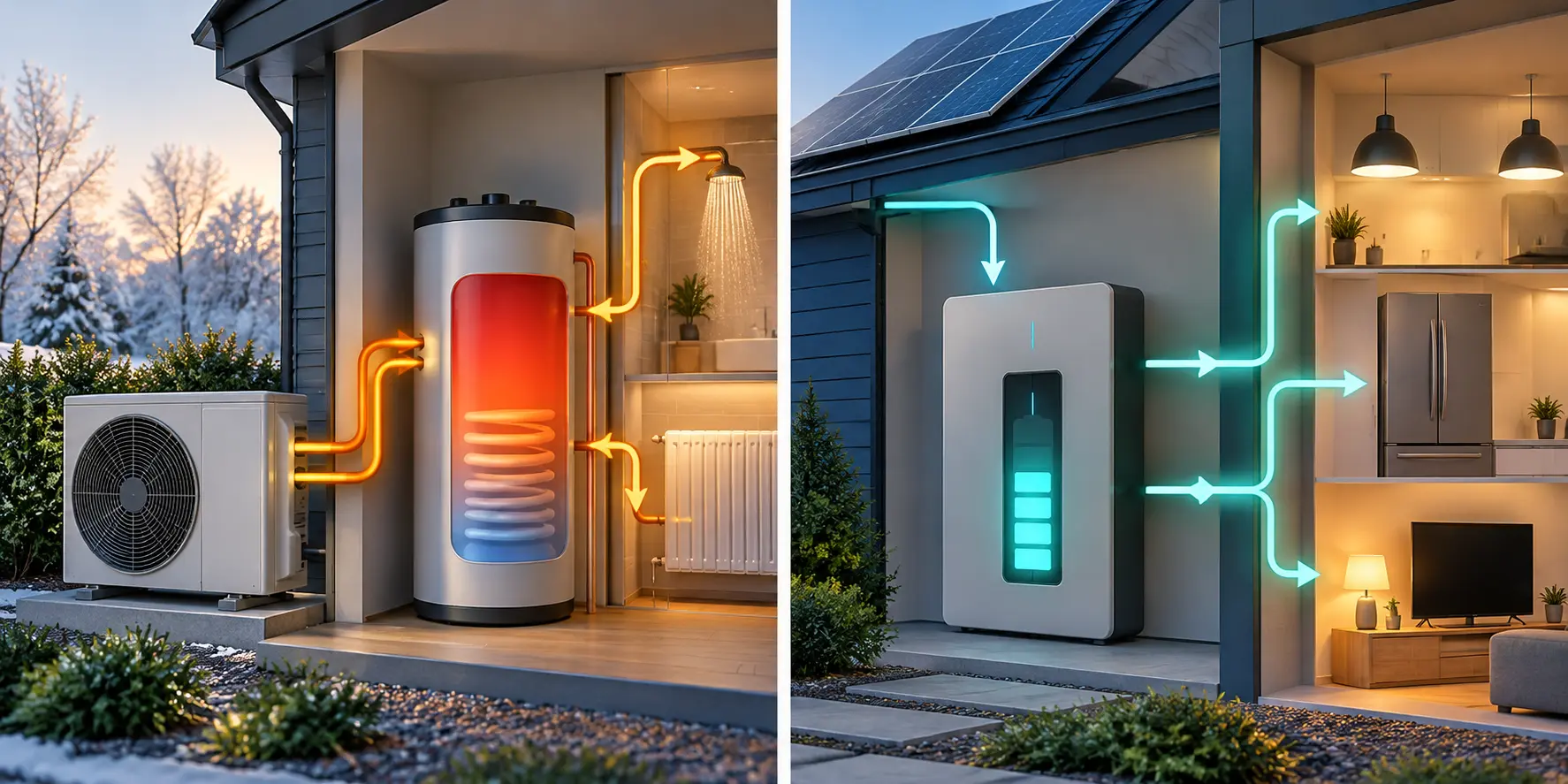
Thermal storage supplies heat; it does not provide electrical backup or power a heat pump during an outage.
Where heat can be stored
| Approach | What may shift | What needs to be checked |
|---|---|---|
| Heat-pump water-heater tank | Some water heating may happen before a higher-price or high-demand period, if the unit and its controls support that schedule. | Household hot-water use, tank capacity, the exact control mode, and the manufacturer’s limits. A 2020 presentation on connected water heaters describes specific load-shifting examples; it is not a promise about every current model or program. |
| Designed space-heating storage | A system that combines a heat pump with a thermal store may move some heating or cooling operation to another period. | Storage type, building and emitter design, control behavior, comfort range, and whether the proposed equipment is commercially available for this home. Research and modeled program examples do not size a household system. |
| Thermostat timing | Some systems may run earlier or adjust operation around a scheduled period. The home may retain some heat, depending on its construction and heating system. | The heat pump’s controls, outdoor conditions, room temperatures, and how quickly the building loses heat. A generic schedule cannot predict comfort or savings for a particular house. |
The approach has to match the equipment and the reason for shifting. A water-heating schedule is not the same as storing space heat, and neither automatically provides electrical backup. For a wider household load plan, see how to sequence a heat pump, water heater, EV, and other upgrades. For questions about who controls connected equipment and what an enrollment agreement allows, see smart heat-pump controls, tariffs, and homeowner choices.
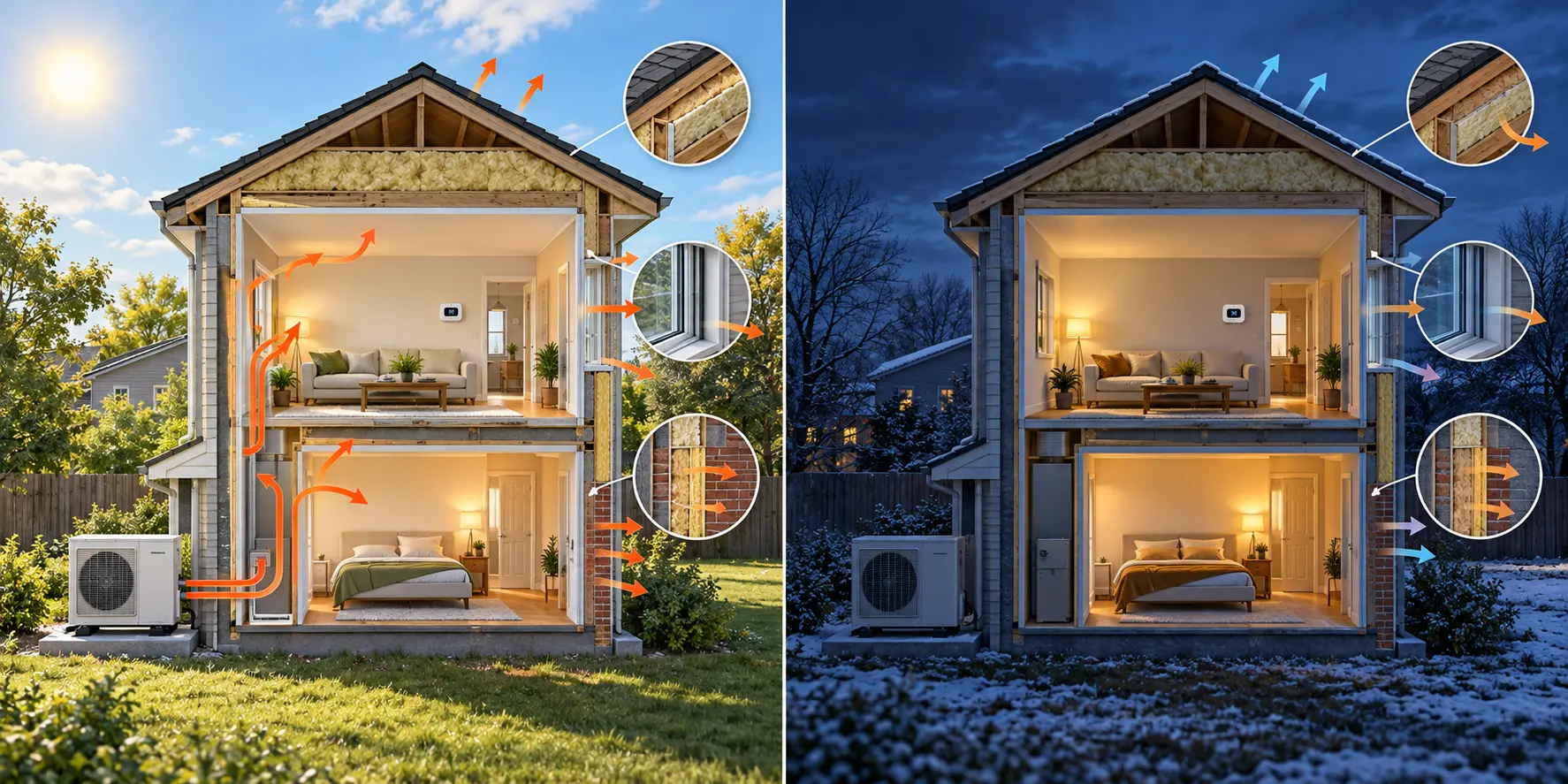
How long a home retains heat depends on its construction, weather, heating system, and comfort needs; this illustration does not predict a schedule or outcome.
What research can and cannot tell you
An Ontario IESO presentation for a 2026 demand-response potential study models thermal water storage paired with air-to-water heat pumps as one way to move some heating or cooling load away from peak periods. It is a scenario for system planning, not an estimate of what a particular home can shift or a current offer to homeowners. The IESO presentation makes that scope explicit.
U.S. Department of Energy project descriptions also cover heat-pump controls designed to coordinate operation with thermal storage, and field-validation work on heat pumps and heat-pump water heaters as possible flexible loads. These describe research and demonstration work, not a universal feature or a guaranteed result. The DOE’s predictive-control project page lists a project term from October 1, 2022, through September 30, 2025. It describes planned residential demonstrations and project targets, but reports no completed homeowner results. The field-validation overview describes its study scope.
The Department of Energy’s hot-water energy-storage webinar gives additional tank and control examples. These older presentations help explain the concept; they do not establish current product availability, a household design, or a guaranteed benefit.
Even when a system can shift demand, lower peak use, lower electricity use, and lower cost are different outcomes. The result depends on the equipment, weather, hot-water or heating demand, controls, and the tariff or program terms. A cheaper time window does not prove that shifting will save money across the full bill. Compare the actual offer and all charges using your household’s expected use; the controls and tariff guide explains what to verify before enrolling.
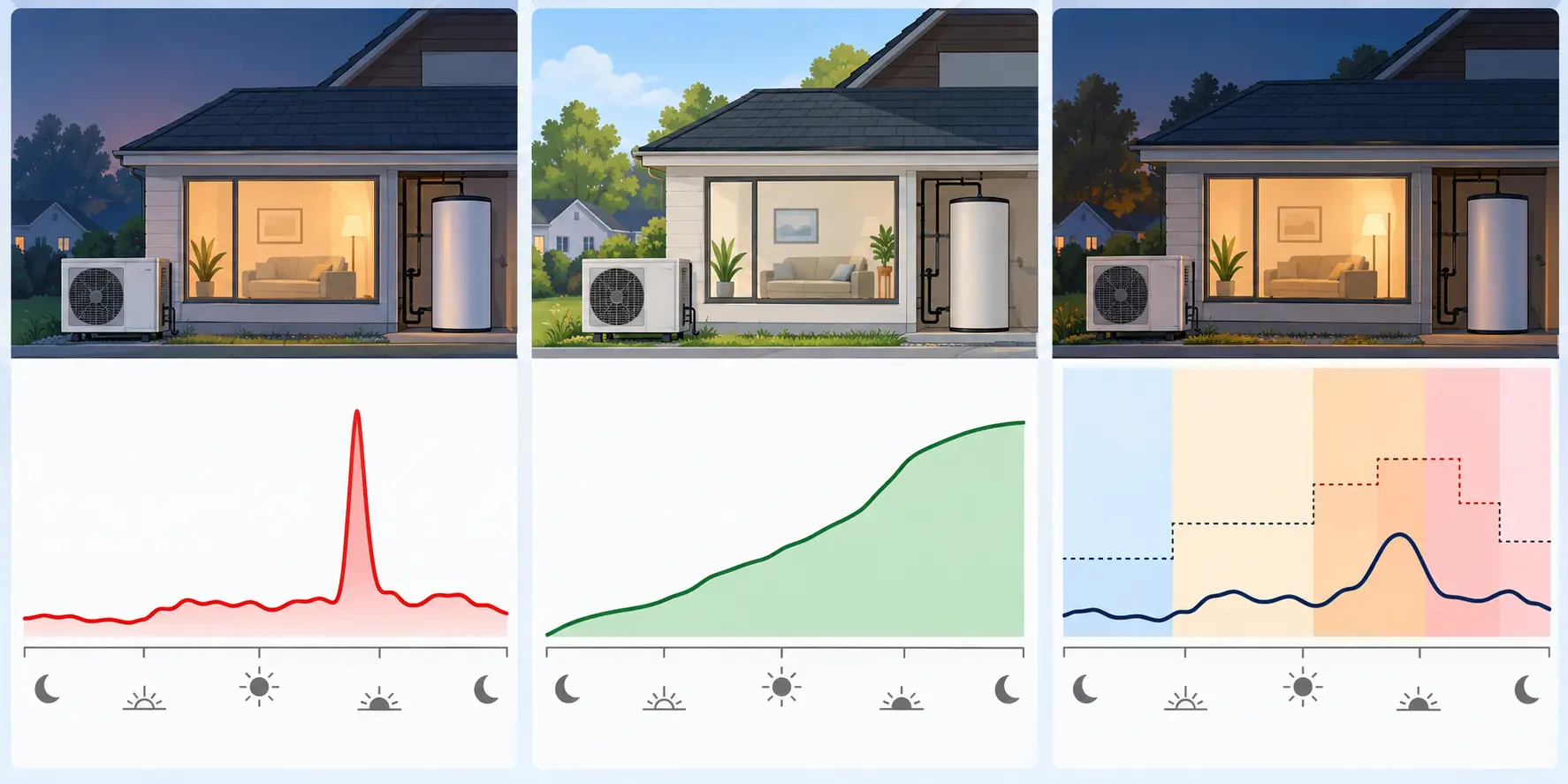
Peak demand, total electricity use, and bill cost are separate measures; this conceptual comparison gives no predicted savings or household outcome.
Questions to ask before choosing a system or schedule
- Which equipment will change operation, and what kind of heat storage does it use?
- What demand is expected to shift, for how long, and under which weather or household-use assumptions?
- How will the design protect room comfort and hot-water availability?
- Can household members see and override a schedule or program event? What happens if internet or provider communication is unavailable?
- Does the expected benefit depend on a specific tariff, utility program, region, or model? What are the full bill terms?
- Does the proposal distinguish peak-demand reduction from total electricity use and cost?
- Which professional will confirm the equipment design, electrical requirements, and commissioning settings?
Do not change system settings beyond the manufacturer’s instructions to chase a tariff window. Ask the heat-pump designer and installer to document the proposed schedule, storage assumptions, comfort limits, and controls. If the goal is operation during a power cut, read what solar, batteries, and heat pumps can do in an outage; load shifting alone is not outage backup.
Key points
- Thermal storage holds heat, while an electrical battery holds electricity; neither term should be used as a substitute for the other.
- Load shifting moves some electricity use in time. It does not automatically lower total use or the full bill.
- A project example or potential study cannot establish a home’s comfort, savings, equipment eligibility, or service capacity.
- Have qualified local professionals check the exact system, controls, tariff, and household needs.
Sources and further reading
- Predictive Device-Level Control and Optimal Sizing of Integrated Heat Pump Systems for Energy Resilience (primary source)
- Field Validation of HPs and HPWHs (primary source)
- Load Shifting with ENERGY STAR Connected Water Heaters (primary source)
- Thermal Energy Storage Webinar Series: Hot Water Energy Storage (primary source)
- Focused Demand Response and Behind-the-Meter DER Engagement Session for Provincial DSM Achievable Potential Study (primary source)