 HeatPumpPath
Heat Pump, Solar, Battery, and Power Outages
Solar panels do not automatically provide outage power; plan the inverter, backup source, critical loads, and expected outage duration as one system.
In this guideJump to a section
Having solar panels does not by itself mean a home will have electricity during a grid outage. Many ordinary grid-connected systems shut down when the grid is lost, for electrical safety. Outage operation requires equipment designed to separate safely from the grid and supply selected loads. A heat pump will run only if the complete backup arrangement can support its electrical needs and controls.
The U.S. Department of Energy’s Solar and Resilience Basics explains that solar panels need an appropriately configured inverter and storage to provide power independently of the grid. The exact arrangement depends on equipment and local interconnection rules; a diagram for one home is not a universal installation plan.
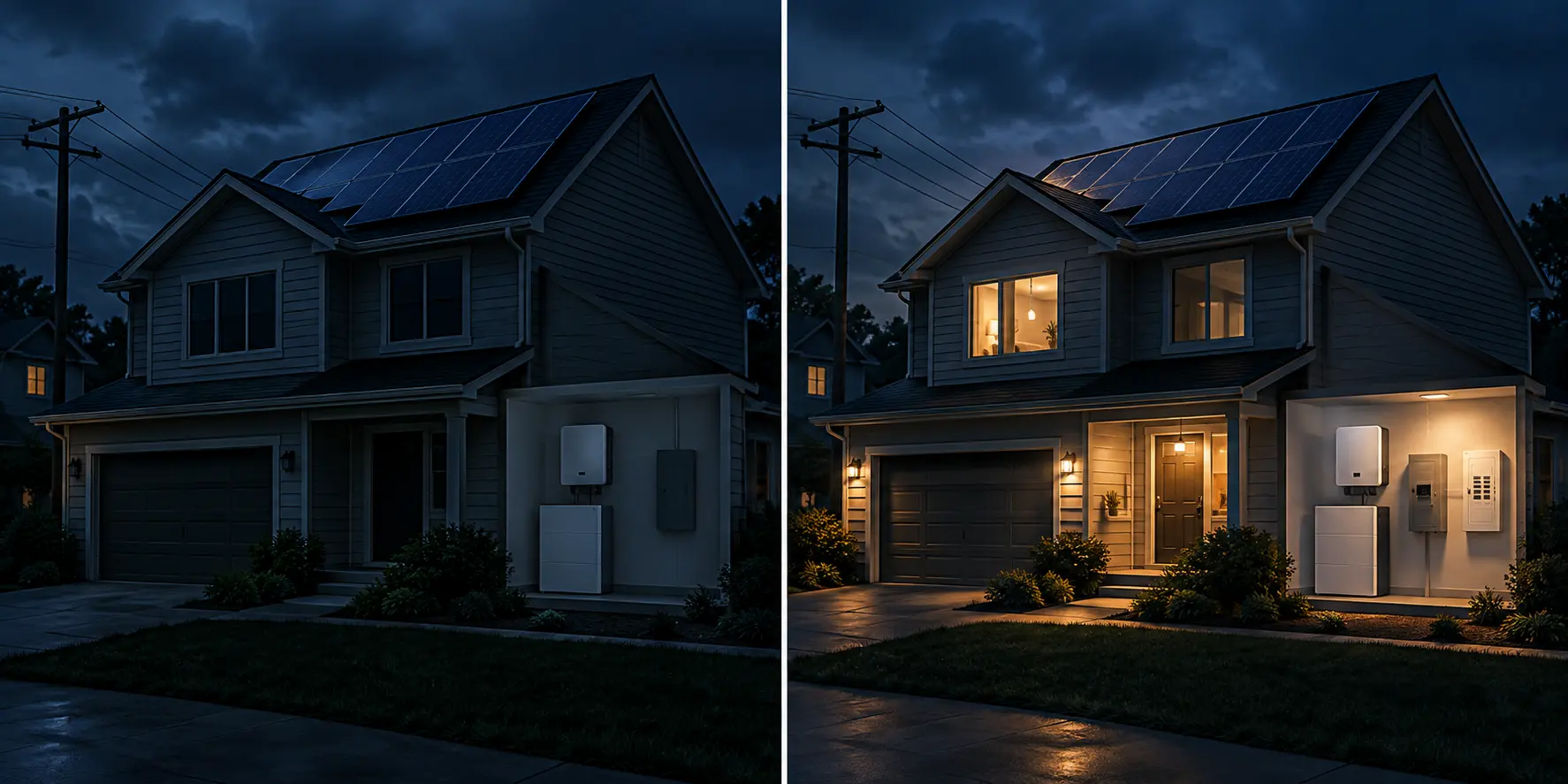
Outage operation requires equipment designed to separate safely from the grid and serve selected loads; this concept is not a universal system diagram.
Separate power from stored energy
Two questions matter. Power, often shown in kilowatts (kW), is the rate at which a system can supply electricity at one time. Energy, often shown in kilowatt-hours (kWh), is the amount available over a period. A battery can have enough stored energy for several hours of light and refrigeration but still lack the power, surge capacity, wiring, or control compatibility needed for a heat pump.
Ask the designer to use the actual heat-pump model and configuration. Heating demand can change with outdoor temperature. Defrost operation, pumps, fans, domestic hot water, and electric resistance backup may add to the demand. No general battery size or outage-runtime estimate can establish that a specific system will operate through a cold spell.
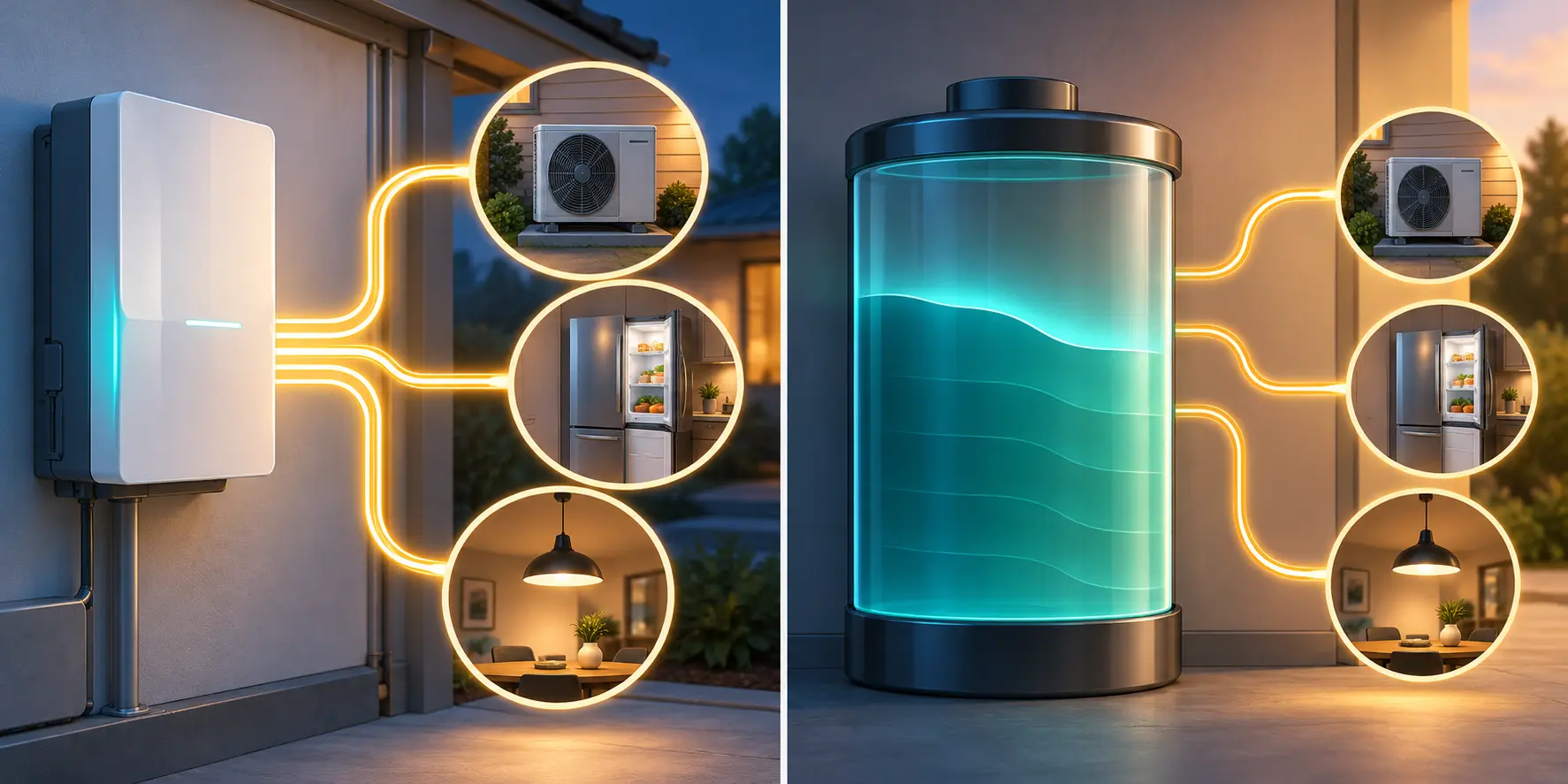
Power rate and stored energy are different limits; no scale, battery size, or runtime is shown.
Choose the loads that matter most
Write down the loads you expect to support, then ask how they will be connected and prioritized. A critical-load plan might consider refrigeration, communications, selected lighting, medical equipment, water pumps, heat, and hot water. The list depends on the people in the home and the expected outage. Running every normal household load is a different design from keeping a few essential circuits energized.
| Question | Why it changes the plan |
|---|---|
| How long should backup power last? | A short interruption and a multi-day outage require different energy reserves. |
| Which loads must run at the same time? | Simultaneous demand affects inverter and backup-system power. |
| What is the cold-weather heating load? | The heat pump and any backup heat may draw more power in demanding conditions. |
| Is there solar during the outage? | Weather, season, shading, and daylight affect what can be generated and when. |
| What else may start automatically? | Water heating, pumps, refrigeration, and controls may compete for limited output. |
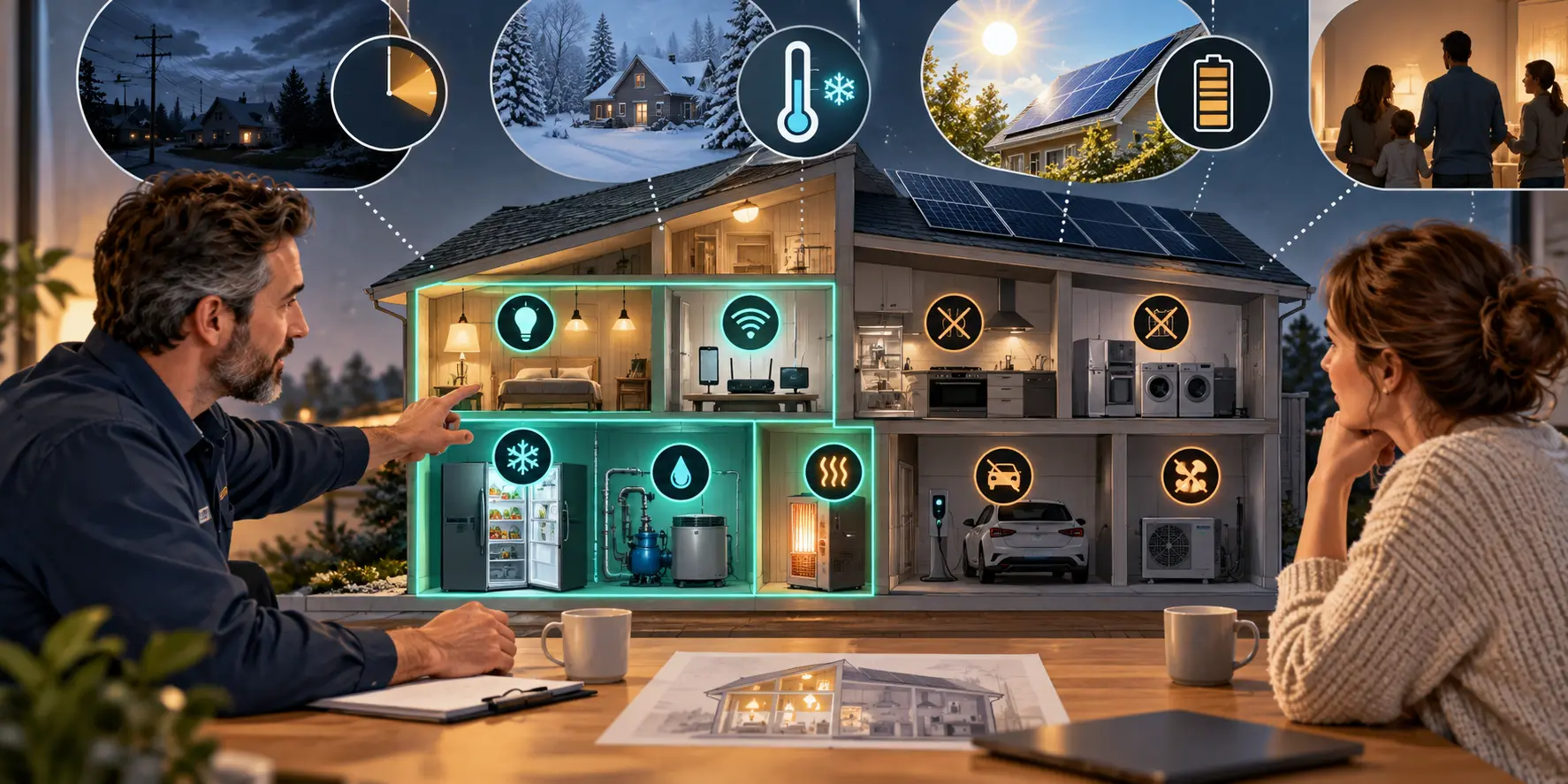
Example only: the appropriate loads depend on household needs, equipment, expected outage, and operating conditions.
Some studies model very different storage needs across climates and home loads. Those results help explain why assumptions matter; they are not a recommended battery size for an individual home. If a proposal includes an outage estimate, ask which loads, temperatures, solar conditions, and time period it assumes. The Department of Energy’s REopt analysis likewise requires defined critical loads and scenario inputs to estimate resilience.
An electric vehicle is not automatically a home battery
Some electric-vehicle (EV) and charger combinations support bidirectional charging, in which a vehicle can send electricity back to a building. This capability depends on the vehicle, charger, inverter or transfer equipment, controls, local approval, and the vehicle’s remaining charge. Availability is not universal, and the same vehicle may need to remain available for driving. Treat vehicle-to-home power as an option to verify for an exact system, not a backup promise. The battery and vehicle-to-home overview from Energy Saving Trust describes the current limitations in its UK context.
Generators and safe transfer equipment
A standby generator may be part of an outage plan, but its output and connection must be designed for the chosen loads. Transfer equipment prevents a generator from energizing utility lines while workers may be restoring power. Never improvise a connection or attempt to backfeed a home. Have a qualified professional specify and install the equipment.
Portable fuel generators also produce carbon monoxide. The U.S. Centers for Disease Control and Prevention says to operate portable generators outdoors and more than 20 feet from windows, doors, and vents. See its carbon-monoxide guidance and follow current local safety guidance and the generator manufacturer’s instructions.
Get a scenario-based proposal
Ask for a one-line system diagram that shows the grid connection, solar inverter, battery, transfer or islanding equipment, critical-load panel, and heat pump. Ask which circuits are included, whether resistance backup is included or excluded, what must be shed, and what duration is estimated for a winter scenario. Ask what still needs utility approval or equipment compatibility verification.
Thermal resilience—how long the building stays comfortable—is separate from electrical backup. Insulation, air leakage, indoor temperature, and outage weather all affect comfort, but none changes the electrical rating of the backup system. Keep those questions in the design conversation without assuming that solar panels, a battery, or a heat pump guarantee heat during every outage.
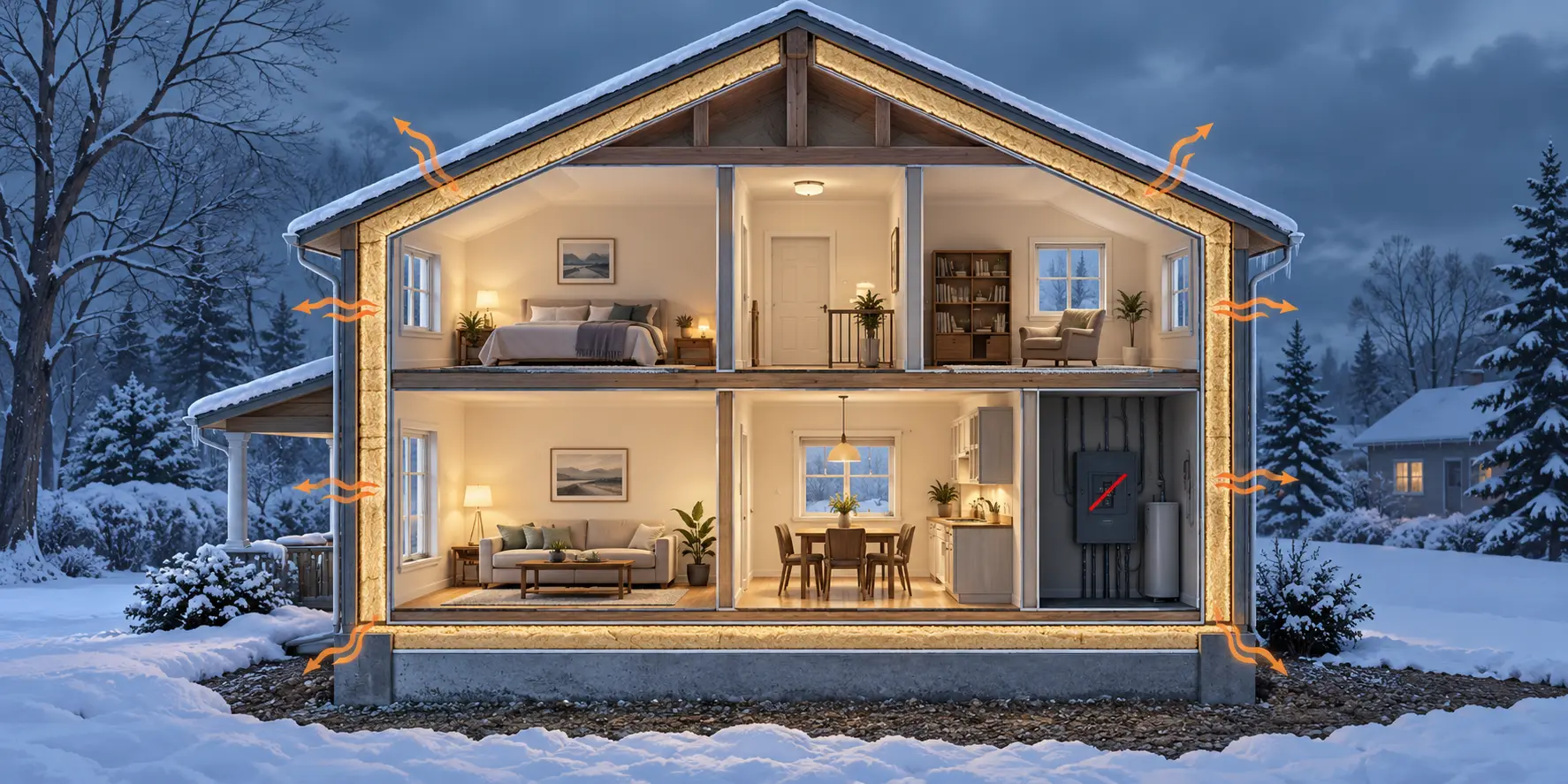
Thermal resilience affects comfort but does not change the electrical rating of backup equipment; conditions and building design matter.
Sources and further reading
- Solar and Resilience Basics (primary source)
- Unlock Expert Energy Analysis with REopt (primary source)
- Battery storage (authoritative-secondary source)
- Generator Safety Fact Sheet (primary source)
- Carbon Monoxide Poisoning Basics (primary source)