 HeatPumpPath
Insulation and Air Sealing Before a Heat Pump
Understand how insulation and air leakage affect heat-pump design, and how to coordinate envelope work without assuming every home needs the same retrofit sequence.
In this guideJump to a section
A heat pump is selected for the heat a particular home loses, not just its floor area. Insulation slows heat transfer through the roof, walls, floors and windows; air sealing reduces uncontrolled movement through gaps. Both can affect comfort and the heating load, but they are different kinds of work and neither has one universal target for every house.
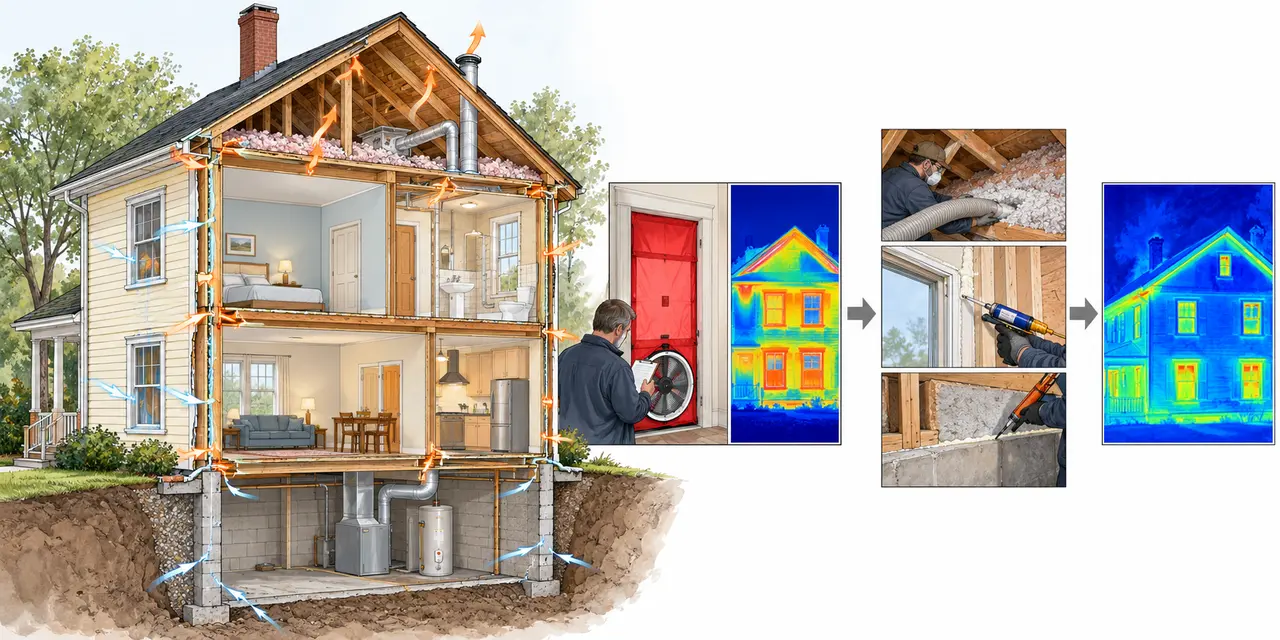
Start with what is known about the house
Before an installer visit, gather what you know about construction and past work. Note whether the loft or attic, basement, crawlspace and walls have insulation, whether windows or doors have been replaced, and where rooms feel cold or draughty. Include photographs of accessible equipment labels and any existing energy assessment. A useful inventory records uncertainty too: “wall build-up unknown” is better than guessing from the age of the house.
Observe patterns over a heating season. Which rooms are hard to keep comfortable? Are there signs of damp, condensation or previous repairs? What ventilation equipment is present? Note open fireplaces and combustion appliances as well. These observations help a qualified assessor decide what needs inspection; they do not identify hidden defects or prescribe a remedy.
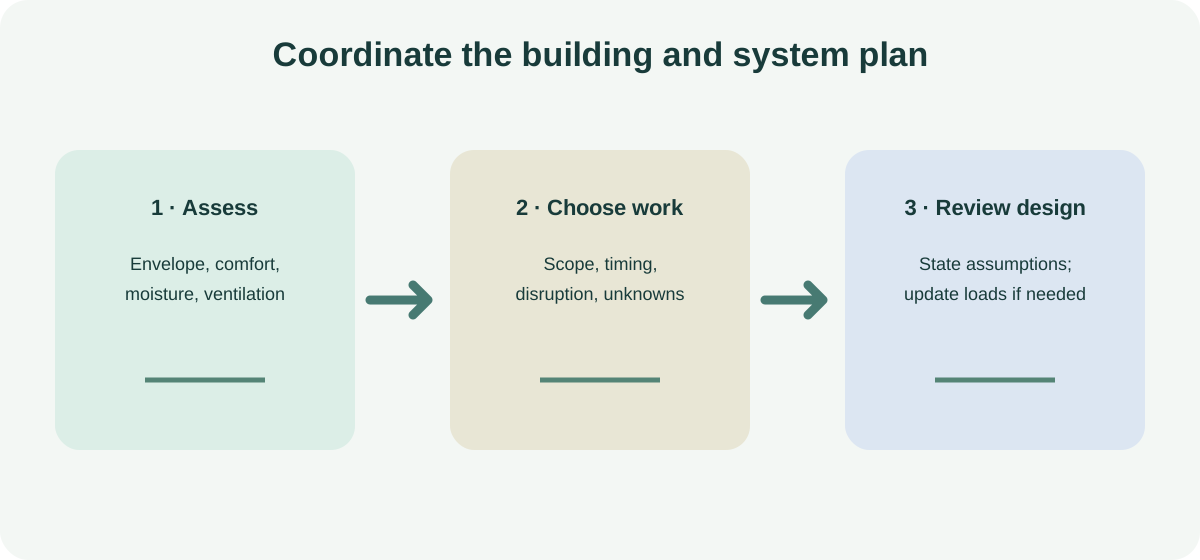
Coordinate the envelope with the heat-loss estimate
An insulation or air-sealing project can change the heat requirement used to select equipment. If substantial work is already planned, tell the heat-pump designer what will be changed and when. The design can then state whether it assumes the current condition or the expected post-work condition. Where work is staged, ask how the load and room-by-room balance will be checked after a material change.
That coordination does not mean “insulate everything first.” A heat pump may be designed around the home as it stands, around committed upgrades, or as part of a staged plan. The right path depends on the building, project timing, disruption, budget and the likely value of each improvement. A written assessment should explain its assumptions rather than promise that one upgrade will guarantee a smaller system, lower bills or a particular comfort result.
Treat moisture and ventilation as part of the job
Air sealing changes how outside air enters a home. Before tightening a house, ask how existing ventilation works and whether the proposed work changes moisture or combustion-air conditions. An older wall may also need a fabric-specific assessment before insulation is added. If there is persistent damp, uncertain wall construction, a fuel-burning appliance, or historic fabric, pause that part of the scope for a qualified building professional. Do not cover a suspected moisture problem or alter combustion equipment as a do-it-yourself step.
For a listed or otherwise protected building, external appearance, materials and repair methods may affect heritage significance or approvals. The details depend on the building and location; a general insulation checklist cannot establish permission. See planning a heat-pump retrofit in an English historic or listed home for the England-specific heritage discussion.
Questions for the assessment and design team
- What evidence supports the current heat-loss estimate, and which parts of the building remain uncertain?
- Which planned envelope improvements are included in the design assumptions?
- If the work is staged, when will room loads and system settings be reviewed again?
- How will the proposal account for ventilation, moisture and any combustion appliances?
- Which improvements are optional, and what benefit or disruption is expected from each?
- What should be documented so later installers can see what changed?
The answer should connect the building assessment to the system design, while leaving construction details and safety decisions to qualified professionals. For the next design question, compare radiators and underfloor heating or existing duct readiness.
Sources and further reading
- Heat pumps (primary source)
- Buying green heating and insulation products: a consumer guide (primary source)
- Guide to Sizing and Selecting Air-Source Heat Pumps (primary source)