 HeatPumpPath
Replacing a Combi Boiler With Heat-Pump Hot Water
A UK combi-to-heat-pump change alters how space heating and tap water are supplied. Prepare for storage, demand, controls, and installation questions.
In this guideJump to a section
A combi boiler heats water as you use it and normally has no hot-water cylinder. Replacing it with a heat-pump system can change that service: a common air-to-water design stores hot water and reheats it to meet household demand. The new system may need space for a cylinder, controls, and pipework that the combi did not require.
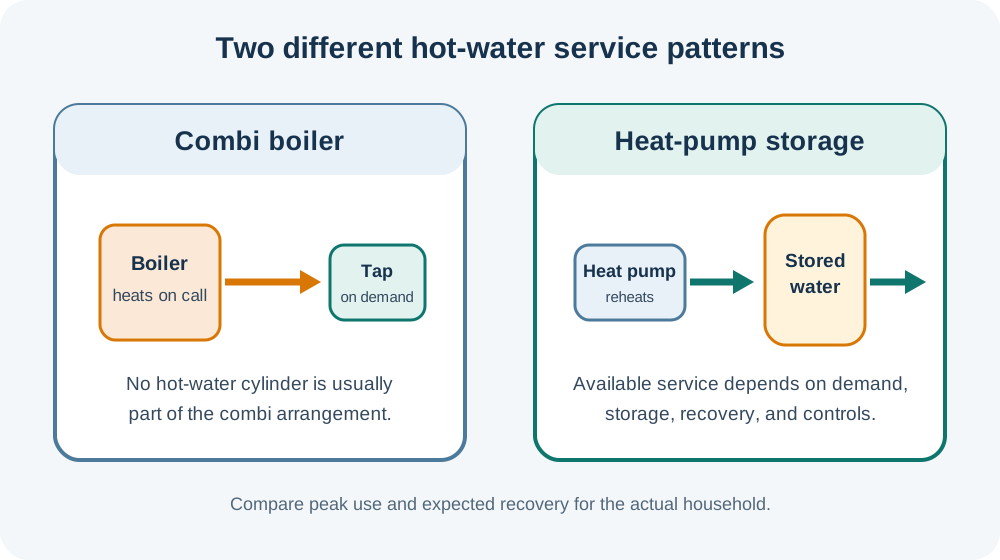
That does not mean every heat-pump replacement needs the same arrangement. An air-to-air system usually needs a separate hot-water appliance. Some hybrid designs retain a boiler for tap water, while other products may use a different storage or water-heating method. Ask the installer to state which appliance will serve each end use.
Compare the service, not just the boiler
With a combi, hot water is produced when a tap or shower calls for it. This avoids storing a tank of hot water, but simultaneous use, mains pressure, and the boiler’s output affect the service. With a cylinder-based heat-pump design, hot water is stored in advance. The usable amount and time to recover depend on the cylinder, heat exchanger, controls, incoming water, heat-pump output, and how the household draws water.
Before deciding, write down the times of day when hot water is busiest. Include showers, baths, kitchen use, and whether several outlets are used together. Note any recent changes, such as a new bathroom or larger household. Do not select the cylinder from household size alone, and do not assume a volume equal to the old boiler’s output will give identical convenience.
Check the house and heating system together
The hot-water cylinder needs a suitable location and a clear route through the house for delivery and future replacement. Check floor support, access, available height and width, nearby pipework, drainage, and whether the proposed location is near bedrooms or living areas. Ask where the controls, immersion or resistance backup, and any expansion or safety components will sit.
Space heating needs its own review. Radiators or underfloor circuits may need to be checked against the heat pump’s design temperatures; the proposal should say which existing emitters remain and what changes are included. Insulation, controls, electrical supply, outdoor-unit location, and installation sequence can affect the whole project. These are site-design questions for the installer, not a reason to guess at a cylinder size.
Compare the hot-water paths
Ask whether the proposal uses an air-to-water heat pump and compatible cylinder, a separate heat-pump water heater, or a retained boiler or other heater for hot water. If a hybrid arrangement is offered, ask which appliance heats the home, which heats water, and how the controls decide when to run each one. If a cylinder is included, request the exact model and its documented recovery assumptions.
Plan the work around the period when the existing boiler is disconnected. The installer should explain when heating and hot water will be unavailable, what removal and disposal are included, and how the new system will be filled, commissioned, and handed over. Do not disconnect, drain, or alter gas, water, electrical, or safety equipment yourself.
Make the quotes comparable
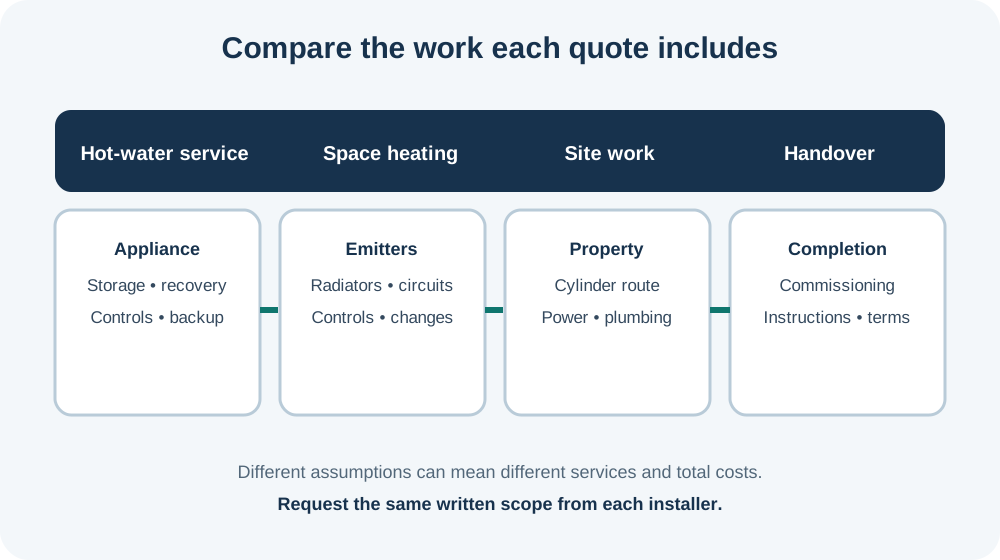
Ask each installer to document the same items:
| Quote item | What to compare |
|---|---|
| Hot-water design | Appliance, cylinder or tank, controls, backup, and expected recovery |
| Household demand | Peak-use assumptions and any planned change in use |
| Space heating | Radiator or underfloor checks, controls, and work included |
| Site work | Cylinder route, pipework, electrical changes, condensate, and outdoor unit |
| Completion | Downtime, commissioning records, user instructions, and service plan |
| Commercial terms | Full price, exclusions, warranties, and any scheme assumption |
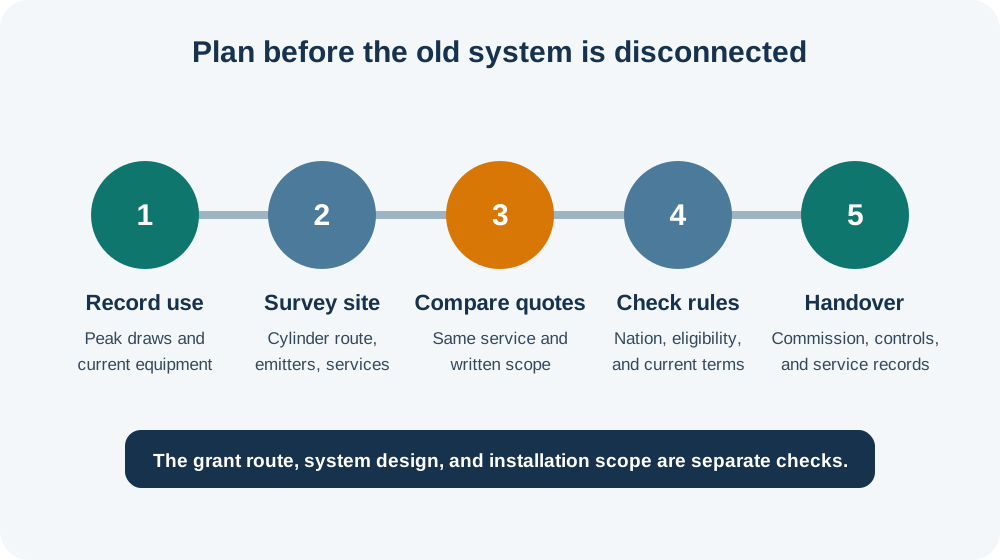
In England and Wales, the Boiler Upgrade Scheme application is installer-led: the current government guidance tells property owners to obtain quotes, confirm eligibility with the installer, and have the installer apply on their behalf. Scheme rules and support differ by nation and can change, so check the official current guidance for the property before relying on an incentive. A grant does not establish that a design is suitable.
Use the cylinder-path guide to compare system types. For household demand and recovery, ask the installer to document the model-specific figures instead of relying on a generic tank rule.
A short preparation list
Gather the boiler’s visible model information, recent energy use if available, and notes about hot-water routines. Photograph the existing installation and the proposed cylinder location without removing covers. Ask what can remain, what must change, which assumptions affect the price, and which local approvals or safety requirements apply. A clear written scope makes it easier to compare proposals and avoid discovering a missing hot-water decision after the work starts.
Sources and further reading
- Boiler types explained (authoritative-secondary source)
- Find a heat pump installer (primary source)
- Apply for the Boiler Upgrade Scheme: How to apply (primary source)
- Hybrid heat pumps (authoritative-secondary source)