 HeatPumpPath
Plan a Heat-Pump Water Heater Replacement Before the Old One Fails
Use the time before a water-heater failure to document household demand, check installation needs, compare HPWH options, and review complete quotes.
In this guideJump to a section
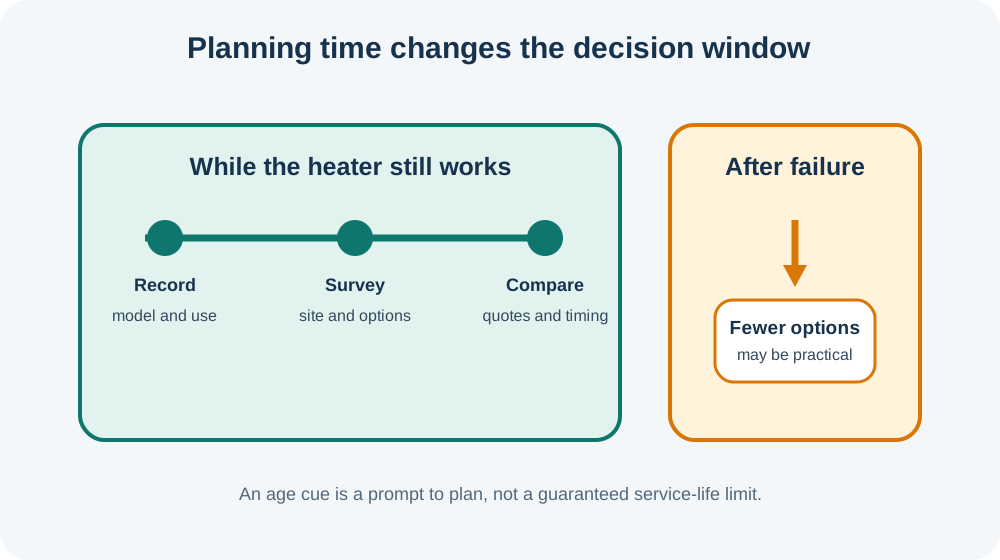
A water heater often gets replaced only after hot showers become unreliable or the tank starts leaking. Planning while the current unit still works gives you time to identify the existing system, check whether a heat-pump water heater fits, and compare complete installation quotes. It also helps separate equipment choices from the plumbing, electrical, and space work that can affect the total project.
Use age and warning signs as planning prompts
ENERGY STAR’s U.S. consumer guidance says that if you suspect a water heater is more than ten years old, consider replacement before it forces an emergency decision. That is a U.S. planning cue, not a guaranteed service-life limit or a rule for the UK or Canada. Equipment type, condition, water quality, maintenance, and use all vary.
Shorter hot-water delivery, water that no longer reaches its usual temperature, or a visible leak are reasons to get professional advice. They do not identify the cause by themselves. If there is an active leak, electrical concern, unusual noise, or a safety-device discharge, follow the product guidance and contact a qualified professional promptly rather than waiting for a replacement comparison.
Record what the next system must do
Note the current heater’s make, model, fuel, approximate age, visible capacity label, and the rooms it serves. Record when hot water is busiest, whether several fixtures run together, and whether the household has changed since the original equipment was installed. A tank’s volume is a useful starting point for discussion, but it is not a final heat-pump sizing method.
If you are considering an HPWH, ask for a site review before choosing a model. The proposal should check the approved air source, room temperature range, space and service clearances, sound, condensate drain, tank route, floor support, pipework, electrical supply, controls, and backup operation. A DOE job aid for its U.S. program context also calls out support for the replacement unit, leak-free plumbing, fit, clearances, household needs, and safe removal of the old heater. Local permits and installation requirements still control.
Compare complete proposals
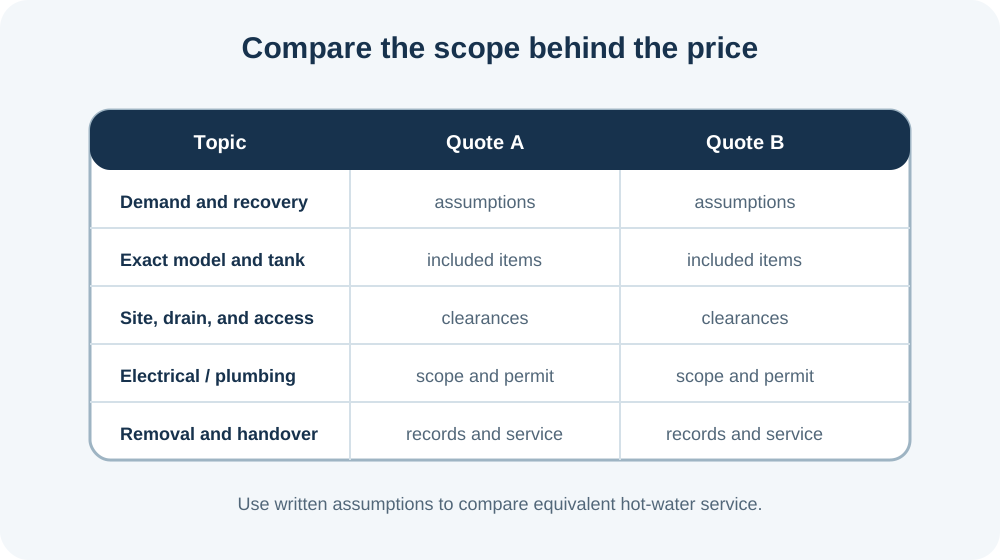
| Item | Ask for in writing |
|---|---|
| Hot-water service | Expected demand, peak use, recovery assumptions, and backup mode |
| Equipment | Exact model, tank capacity, ratings, operating range, and warranty |
| Site conditions | Air path, clearances, floor support, sound, condensate, and access |
| Other work | Pipe changes, electrical work, drainage, permits, and old-unit removal |
| Handover | Commissioning records, control instructions, maintenance, and service contact |
Compare like with like. Two quotes with different storage, backup, electrical work, or removal assumptions may not offer the same service even when both use the term “heat-pump water heater.” Ask how each proposal handles future maintenance and what would become an extra charge if the site needs additional work.
Leave time for local checks
Before agreeing to work, verify the installer’s qualifications and the current local rules for plumbing, electrical work, permits, product availability, and any incentive. U.S. ENERGY STAR and DOE materials are useful planning sources for U.S. products and programs; they do not establish requirements in other countries. In the UK, scheme and installer requirements differ by nation and change over time. In Canada, confirm current product certification and local requirements.
Do not drain, disconnect, move, or open the existing heater to collect information. Photograph visible labels and the surrounding installation only if it is safe to do so. Ask the installer to inspect the unit, confirm the demand and location, and explain the written scope.
For a constrained room, use the small-home HPWH fit guide. If the existing system is a UK combi boiler, see the combi transition guide for the separate hot-water service decision.
Sources and further reading
- When Should You Replace Your Water Heater? (primary source)
- Island Grantee Job Aid — Install a Water Heater (Heat Pump) (primary source)
- Heat Pump Water Heater Design Considerations (primary source)