 HeatPumpPath
Cold-Climate Heat Pump Capacity at Design Temperature
Learn how to compare a home's design heat loss with the capacity of the exact proposed heat-pump system in cold weather.
In this guideJump to a section
A cold-climate label can help identify a product tested under defined conditions. It cannot tell you whether the proposed system can heat a particular home on its design day. To check that, compare the home’s calculated heat load with the available output of the exact indoor and outdoor equipment combination at the same outdoor condition.
Read the home load and equipment data as separate things
The home load is the rate of heat needed to maintain the design indoor conditions when it is a selected temperature outdoors. The equipment performance table reports what a specific system combination can deliver at stated test conditions. Both values need matching units and conditions before they can be compared.
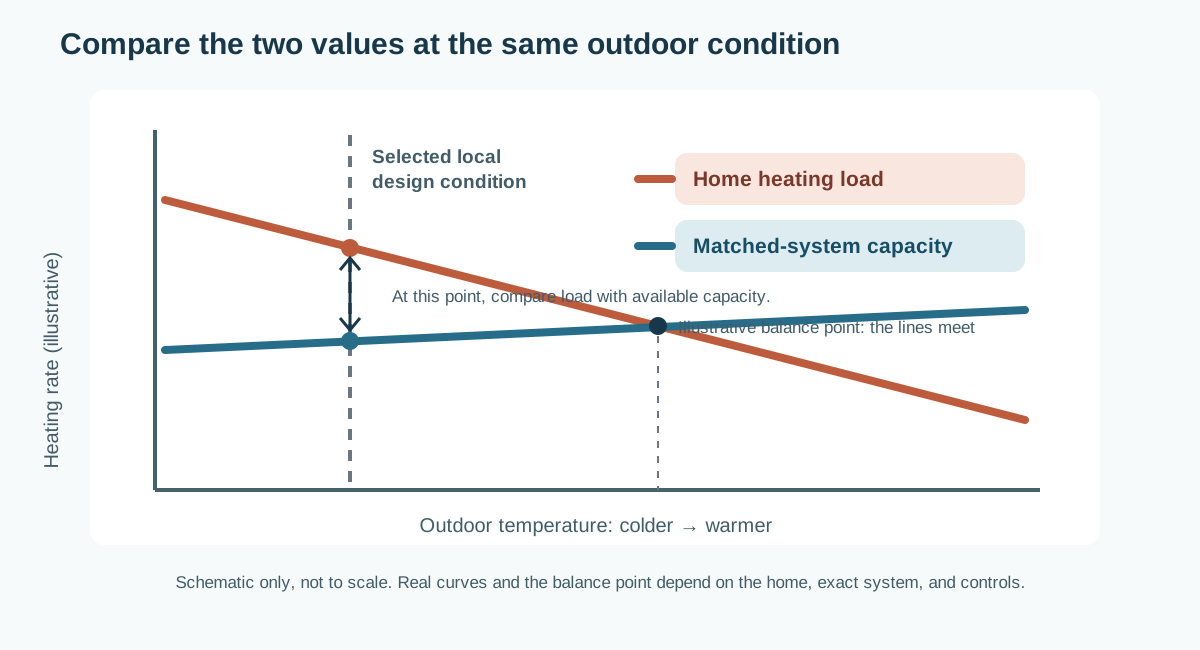
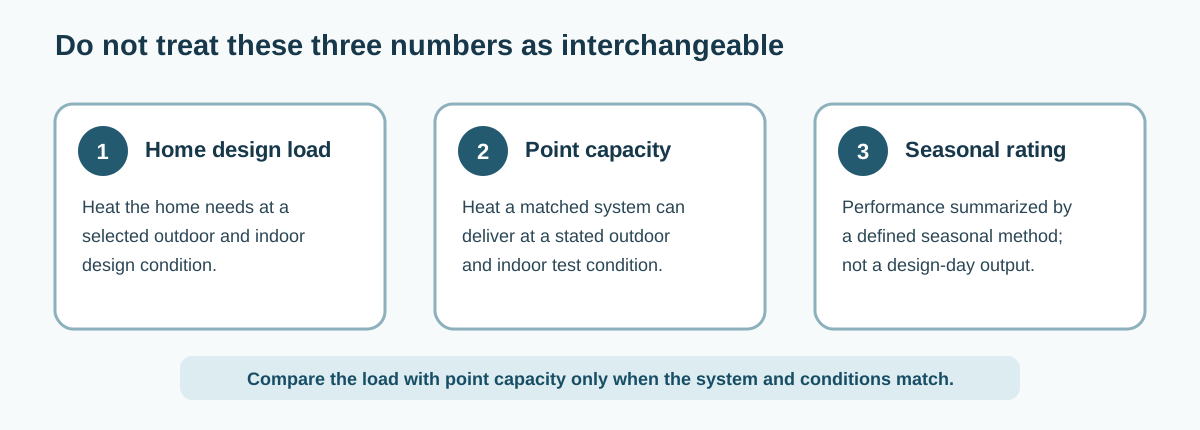
The point where a home’s heat-load line meets a system’s available-capacity line is often called the thermal balance point. It belongs to that home-and-system pairing, not to a heat-pump category or one universal outdoor temperature. If the home’s load is higher than available heat at a relevant condition, the designer must explain how the gap is handled. If the system has enough capacity at that point, the design still needs to consider milder weather, minimum output, heat distribution, and controls.
Match the whole equipment combination
Capacity can differ with outdoor temperature and with the indoor unit, airflow, controls, and operating conditions used for the rating. For air-to-water systems, the water flow temperature and selected emitters also affect the match. A model-family brochure or an outdoor-unit nameplate may not describe the installed system’s delivered output.
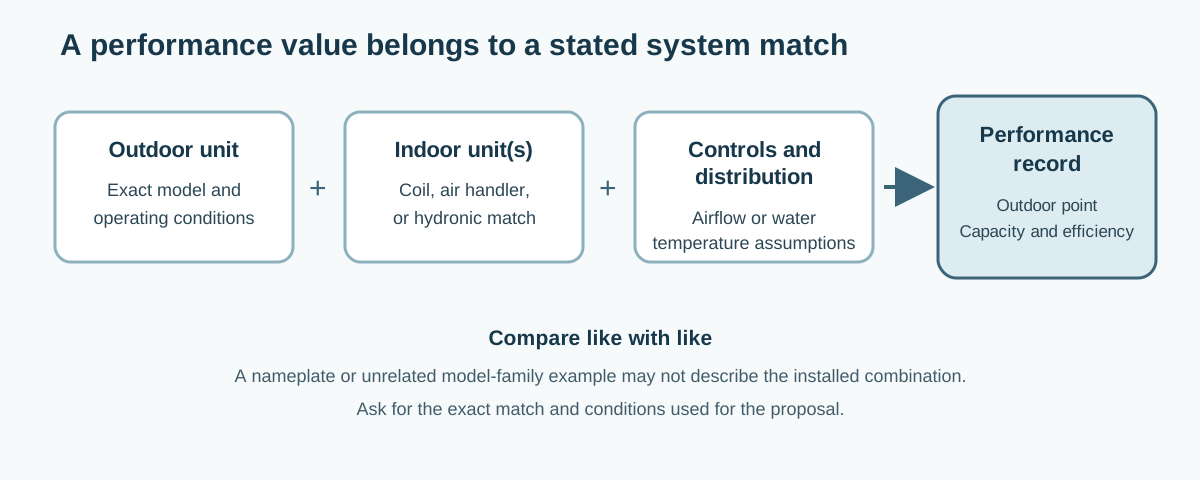
Ask for the manufacturer’s extended performance data for the proposed combination. The useful row is the one that shows the outdoor temperature and the indoor conditions that matter to the installation. Request maximum and minimum heating output, efficiency at the same conditions, control behavior, and notes about defrost where available. A seasonal rating summarizes performance under a prescribed seasonal method; it is not a point capacity at your local design temperature.
If the table does not include the home’s exact design temperature, ask the designer how the missing point was estimated and what source values were used. Do not treat a plotted or interpolated value as a manufacturer’s directly tested value. It should remain clear which numbers are reported, estimated, or modeled.
Put cold-climate labels in context
For example, the U.S. ENERGY STAR cold-climate designation uses defined low-temperature test requirements, including performance at 5°F and verification of native controls. Check the current criteria and the listed product type. Passing a product test says something about that product under the test method; it does not compare its output with a home’s load, establish performance at every colder temperature, or guarantee comfort through a power outage.
Look beyond one threshold when reviewing a proposal. A 5°F test point may be warmer or colder than the home’s selected design condition. The system may also have a different indoor match, airflow, water temperature, or control setup than the one used in a product claim. Ask the designer to connect the certification or rating to the actual combination and to the home’s load calculation.
A practical comparison checklist
For the proposed system, ask for:
- The outdoor unit and every indoor unit, coil, air handler, or hydronic component in the match.
- The home’s heating load and selected local design temperature.
- Maximum output and efficiency at the design condition, plus nearby data points if available.
- Minimum output in milder weather, so the reviewer can see how the equipment may modulate or cycle.
- The airflow or water-temperature assumptions and the emitters or ducts included in the design.
- How defrost and native controls are represented in the data.
- The balance point, any capacity gap, and the planned role of supplemental heat.
If the answer shows only an ENERGY STAR label, a rated capacity at one standard point, or a maximum number without the matched indoor equipment, the comparison is incomplete. Start with the home-load calculation and carry the resulting design condition into the backup-heat decision.
Sources and further reading
- Cold Climate Heat Pump Sizing and Selection (primary source)
- Heat Pump Equipment Key Product Criteria (primary source)
- Air-Source Heat Pumps (primary source)
- Design Conditions (primary source)
- MIS 3005-D: The Heat Pump Design Standard (primary source)