 HeatPumpPath
Heat-Pump Noises: What Is Normal and When to Call for Service
Record when a heat-pump sound occurs and how it changes. Use model and weather context to decide when to ask a qualified professional without treating sound as a diagnosis.
In this guideJump to a section
A sound description cannot identify a heat-pump fault on its own. The unit may sound different as it changes mode, moves air, or runs a defrost cycle; the building, mounting, distance, and weather also affect what you hear. A sound that is unfamiliar to you may be ordinary for one system, while a new or worsening sound may deserve attention. Use the sound as an observation, not a diagnosis.
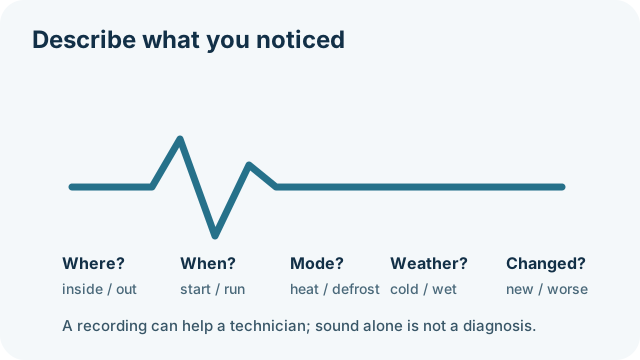
Describe what changed
Write down where the sound comes from, when it occurs, the operating mode, outdoor conditions, and whether it happens during startup, steady operation, or defrost. Note whether it is new, louder than before, repeated, or associated with reduced heating or a message on the controller. A short recording from a safe distance may help a technician, but do not approach a fan or open a cover to get a clearer clip.
Some homeowner guidance describes humming or clicking, and whooshing or gurgling near an outdoor unit, as sounds that may occur during operation. Those examples from Nova Scotia do not define a universal normal sound for every model. Likewise, a sound described as loud scraping, banging, or strong vibration is a reason to contact a professional, but it does not say what component is at fault.
Use related symptoms to decide what to report
If a sound occurs while outdoor frost clears, note whether the system appears to return to heating and whether ice or drainage remains afterward. See the defrost guide for safe observations. If the sound accompanies cold rooms, record which spaces are affected and use the comfort log.
Contact the installer or a qualified service provider when a sound is sudden, worsening, associated with significant vibration, repeated loss of heat, a warning message, or other persistent change. Ask what information they need before arranging a visit. For equipment near a property boundary or shared with neighbors, ask the installer to check the model’s sound information and installation context; this page sets no decibel threshold or planning conclusion.
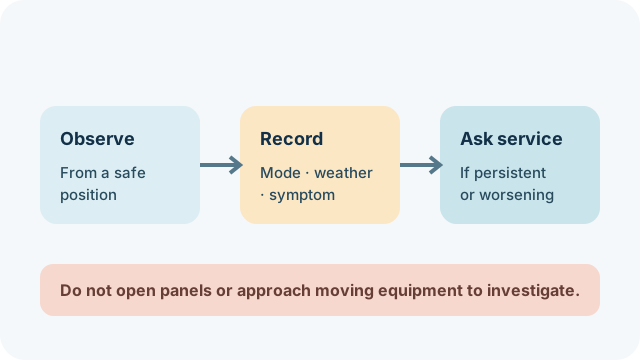
Keep the equipment boundary clear
Do not remove panels, place a hand near a fan, tighten components, touch refrigerant lines, or attempt to silence a sound by changing internal controls. A sound may involve a fan, compressor, refrigerant flow, defrost, mounting, or something nearby, and these cannot be distinguished reliably by a general description. Leave electrical, refrigerant, and mechanical checks to qualified personnel.
When you contact service, include the unit model, the sound recording if safe, the time and weather, the setting or mode, whether the noise is new, and any comfort or display changes. Keep the maintenance and service record with the manual. Do not wait on an urgent local safety issue because a sound resembles an example in a consumer guide.
Sources and scope
Efficiency Nova Scotia’s noise guide provides regional examples, not universal sound limits. Climate Action Wales describes sound assessment in a Welsh installation context. Natural Resources Canada’s heat-pump guidance gives homeowner context. Model manuals and qualified service are needed for equipment-specific interpretation.
Sources and further reading
- Heat Pump Tips: Are These Noises Normal? (authoritative-secondary source)
- Heat pumps: Green energy (primary source)
- Heating and Cooling with a Heat Pump (primary source)