 HeatPumpPath
High Heat-Pump Bills After Installation
Compare energy use, billing periods, weather, backup heat, and system assumptions before deciding why a heat-pump bill changed.
In this guideJump to a section
A higher bill after a heat-pump installation is a reason to investigate, not proof that the equipment is faulty or that the system was designed incorrectly. The amount due combines energy use, the rate charged, billing dates, and sometimes other household loads. Weather, indoor temperatures, hot water, backup heat, system design, and changes in occupancy can all affect the comparison.
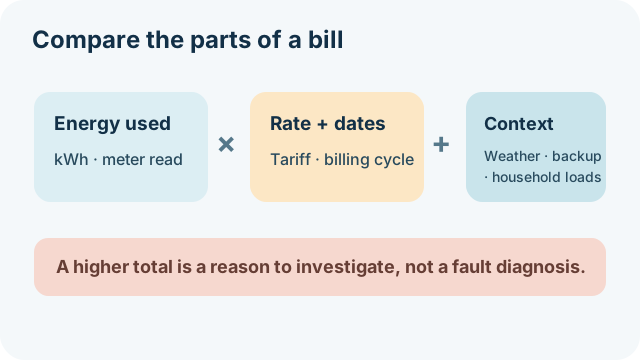
Compare like with like
Start with the bill dates and meter units. Compare electricity use in kWh across similar periods, not just the currency total. If the bill is estimated, compare it with an actual meter reading when available. Note any tariff change, standing charge, time-of-use period, or other new electrical load. If a gas or oil system remains, record its use too; an electricity bill alone may omit heat still supplied by the older system.
Weather matters. A colder period can require more heat even when the system is operating as intended. Compare the same season or use a local weather record as context; one month is rarely enough to establish seasonal performance. Also record thermostat settings, occupancy, hot-water use, and any periods when doors or windows were left open. Avoid turning a single bill into a savings estimate.
Look for evidence before changing settings
Check user-accessible information such as the system mode, filter condition, thermostat schedule, and visible backup indicator. Do not disable electric resistance, a retained boiler, freeze protection, or a safety control to reduce consumption. If a smart thermostat is certified or connected to a utility program, its history may add context, but certification does not establish your household’s enrollment or an event. Compare program records with the bill period before attributing a change.
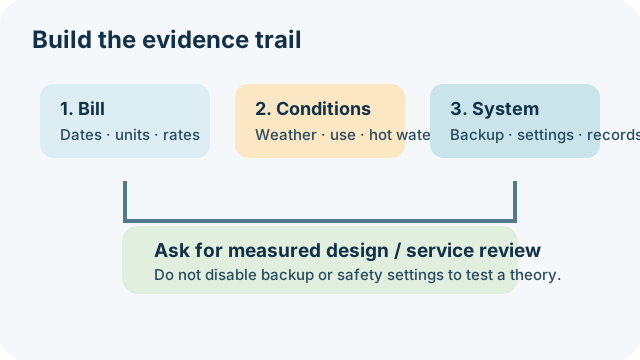
Ask the installer for the system’s design assumptions: heat loss, expected operating conditions, backup sequence, commissioning results, and the basis of any cost projection. ENERGY STAR recommends that contractors verify equipment sizing, airflow, refrigerant charge, and duct condition. These checks require appropriate professional measurements; they are not homeowner repair steps.
Separate cost from system performance
The amount paid and the amount of heat delivered are related but different questions. If the same period has a new tariff, longer billing cycle, or more household electricity use, the bill can rise without showing a heat-pump fault. Conversely, a low bill does not establish that rooms are comfortable or the system is meeting its design intent. Keep the records separate so the service conversation can address the right issue.
For UK air-to-air systems, Energy Saving Trust notes that cost and savings depend on the system design, the heating being replaced, and how the equipment is used; its guide does not calculate your household bill. A local energy rate or modeled example from one country should not be treated as a rate or result for another.
When to call the installer
Request a review if bills remain unexpected after checking dates, units, rates, and visible operating records, especially when the home is also cold, backup seems to run unusually, or the system displays a persistent fault. Bring bills, meter readings, weather context, thermostat records, and installation paperwork. Ask which measurements would determine whether the issue is tariff, operation, backup use, distribution, design, or equipment service.
Use the cold-room guide if comfort is also affected, and the retained-system guide if another heater remains in use. No universal bill amount or saving can diagnose an individual home.
Sources and further reading
- Air-Source Heat Pumps (primary source)
- Air-to-Air Heat Pumps (authoritative-secondary source)
- What to Confirm After the Install (primary source)
- Smart Thermostats Key Product Criteria (primary source)