 HeatPumpPath
Using a Heat Pump with an Existing Boiler or Furnace
Understand how a retained boiler or furnace may interact with a heat pump, and what to ask before changing controls or relying on backup heat.
In this guideJump to a section
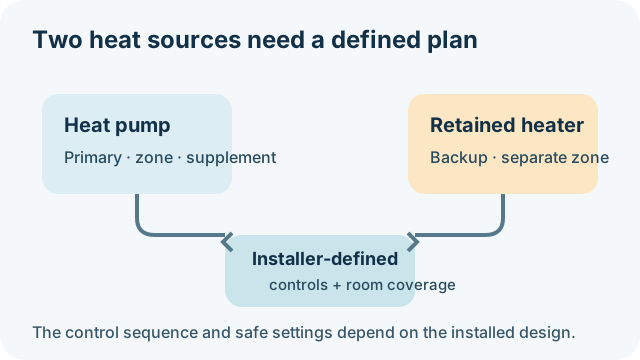
Keeping an existing boiler or furnace does not tell you how the new system will use it. The retained equipment might provide backup, heat a different part of the home, serve hot water, or be coordinated with the heat pump by controls. The design and the installer’s handover should explain which role applies. Do not assume that a second heat source will switch on at a particular outdoor temperature or save money in every home.
Find out how the two systems are meant to work
Ask whether the heat pump is intended to heat the whole home or only selected rooms, and whether the retained system is a backup, a supplement, or a separate zone. Ask what signal starts each system, whether the controls operate together, and what the homeowner should see when the backup runs. A hybrid system may use a control strategy or tariff that differs from another installation.
Thermostat location matters. In one NYSERDA/Efficiency Maine example, a retained boiler or furnace thermostat outside the area served by a heat pump may call for the retained system to heat more of the home. The sheet gives example layouts; it does not provide a universal adjustment. The installer should explain how the sensors, zones, dampers, or radiators work in your system.
Do not copy another home’s settings
Advice about thermostat offsets, radiator valves, dampers, and changeover points depends on the system layout and local design. A setting from a New York or Maine example does not automatically apply in the UK, Canada, or another U.S. home. Do not close radiators, dampers, or zones, disable backup, or change a changeover setting unless the installed instructions identify it as an owner control or your installer confirms it is safe for your arrangement.
This caution matters in cold weather. If a boiler or furnace is part of the home’s freeze-protection plan, changing its controls may affect more than comfort. Ask the installer how the home is protected when the heat pump cannot meet the load, during a power interruption, or when an area is not served by the heat pump. Use the equipment manuals for any stated emergency operation.
Build a record before troubleshooting
When the heat sources seem to compete, note which thermostat called, what rooms were warm or cool, outdoor conditions, system mode, displayed messages, and whether the boiler or furnace ran. Keep a copy of the control diagram, commissioning or handover notes, and the manuals for both systems. Avoid opening panels or testing wiring to determine which system is active.
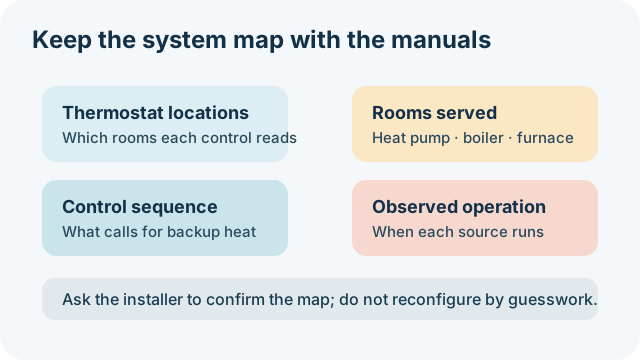
Bring the record to the installer or qualified service professional. Ask them to confirm the intended control sequence, thermostat locations, areas served, and the conditions that call for backup. If bills are the concern, compare energy use and billing periods before drawing a conclusion; the high-bill guide explains the information to collect.
What the guidance can and cannot tell you
Natural Resources Canada’s gas-transition guide and Energy Saving Trust’s Wales-facing hybrid guide describe possible hybrid arrangements, but neither establishes the correct controls or tariff for a specific property. NYSERDA’s fact sheet, prepared with information from Efficiency Maine, provides example thermostat and emitter layouts. Use those examples to frame questions, not as instructions to reconfigure another system.
Sources and further reading
- Heat Pump Basics: Transitioning from Gas Heating (primary source)
- Hybrid heat pumps (authoritative-secondary source)
- How and When to Use An Existing Boiler or Furnace Heat Pump (primary source)