 HeatPumpPath
Heat-Pump Cooling and Humidity in a Hot-Humid Home
Learn why a heat pump can cool a home without controlling humidity in every room, and what to ask about loads, ventilation, equipment, and controls.
In this guideJump to a section
A heat pump can lower the temperature in a room while leaving the home more humid than you want. Cooling and moisture removal happen together in many systems, but they are different parts of the design. A heating-capacity rating or a thermostat reading alone does not show whether a system can manage the home’s summer moisture load.
The right answer depends on the climate, the rooms being cooled, the building envelope, outdoor-air ventilation, internal moisture, and the equipment’s capacity and controls. The U.S. Department of Energy (DOE) notes that ventilation is not an effective cooling strategy in hot, humid climates; shading and envelope improvements can reduce cooling demand, but they do not determine the home’s humidity result (DOE, Home Cooling).
Cooling temperature and humidity are separate loads
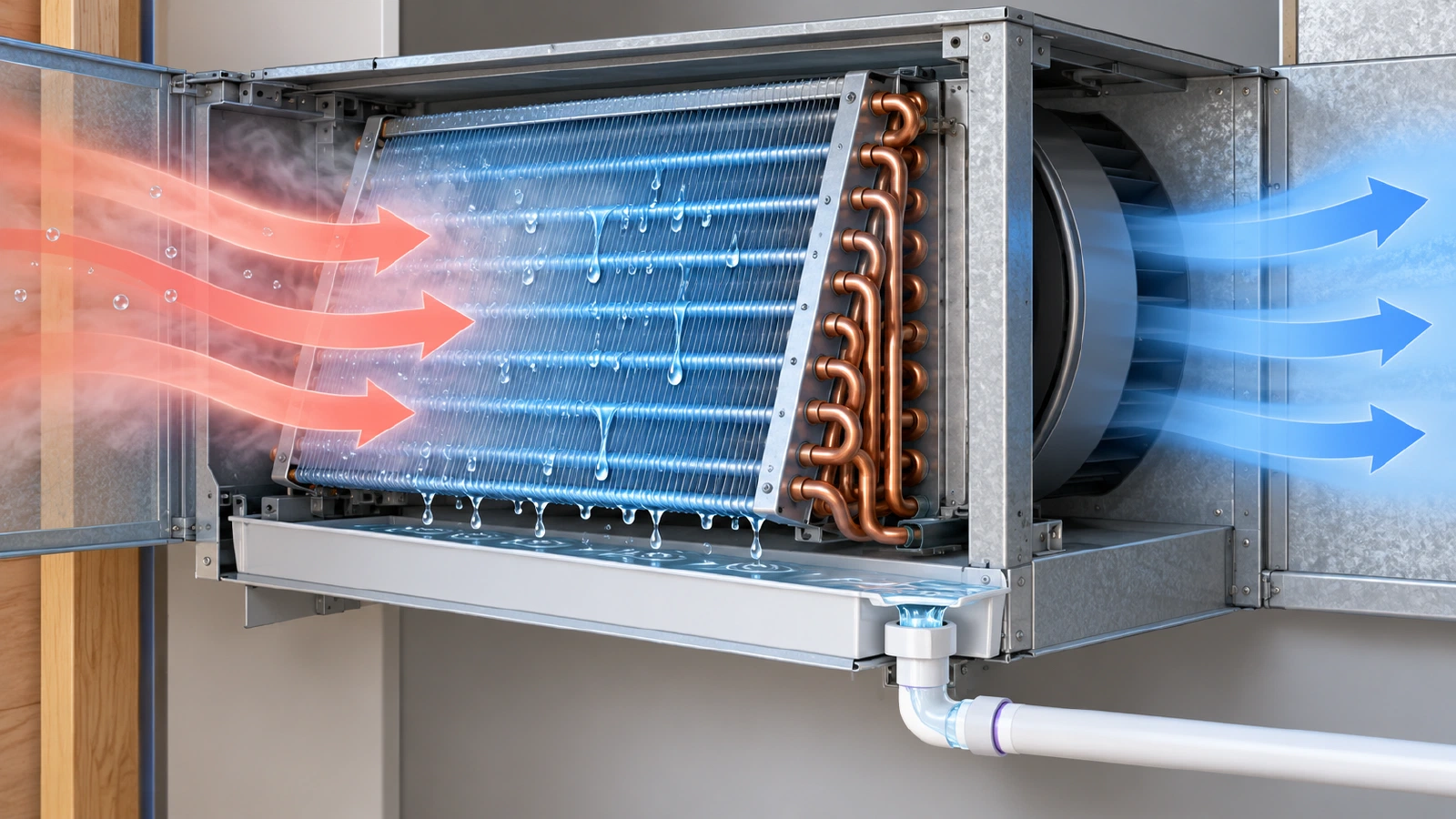
Cooling removes sensible heat, which changes air temperature. A cooling coil can also remove latent heat by condensing some water vapor from the air that passes over it. How much moisture a system removes depends on its operating conditions, not just on whether it is capable of cooling.
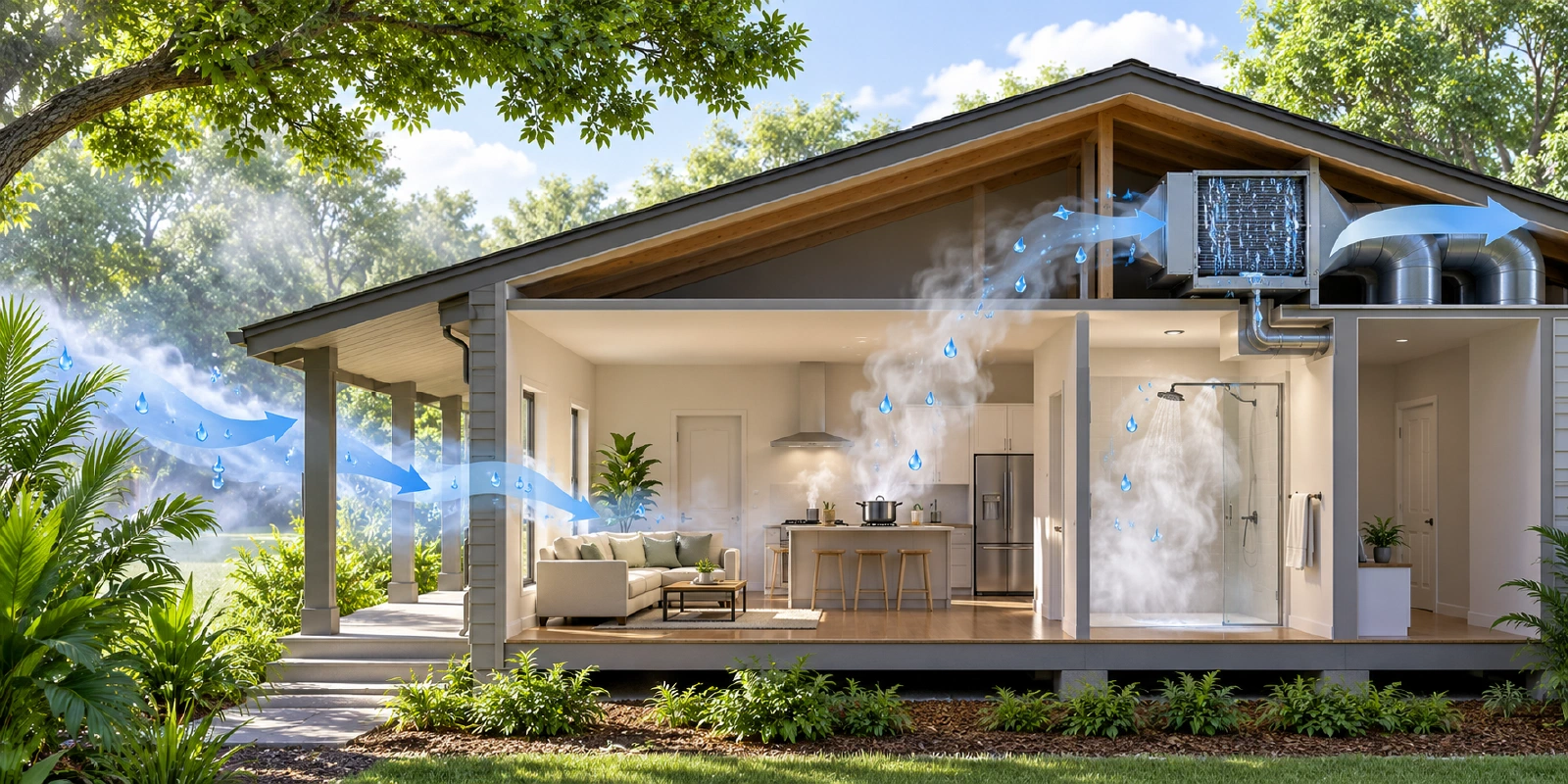
In a hot-humid home, outdoor air entering through ventilation or leakage can add both heat and moisture. Showers, cooking, drying laundry indoors, and other normal activities add indoor moisture as well. At the same time, a well-insulated or smaller home may have a modest temperature load even when its moisture load remains significant. Humid outdoor air and everyday activities such as showering and cooking can continue to add moisture while the cooling system meets the temperature demand.
 DOE research on low-load, mechanically ventilated homes in a hot-humid climate studied this mismatch and identified part-load humidity control as a design challenge; it does not provide a universal thermostat setting or equipment prescription (DOE project summary; DOE HDAC project).
Look at the whole home, not only the thermostat
Before comparing equipment, gather the conditions that change the answer:
- Which rooms become warm or damp, and at what time of day?
- Are doors usually open or closed? Which rooms receive direct sun, and when?
- What cooling equipment and indoor units are already present? Where are their thermostats and air outlets?
- Are windows opened during humid weather? Is there mechanical ventilation, kitchen or bathroom extraction, or a planned envelope upgrade?
- Are there recurring indoor moisture sources or signs of water entry that need a building assessment?
If you already have room temperature or relative-humidity readings, note where and when they were taken, along with the system mode and whether windows or doors were open. A single reading cannot identify the cause of discomfort, and there is no one reading in this guide that diagnoses a building or health problem.
Ask how the design handles low-load hours
Cooling equipment should be selected for the home’s calculated cooling needs, including moisture and ventilation effects, rather than copied from a heating rating or chosen from floor area alone. Ask the designer to explain both sensible and latent cooling needs and how the selected equipment behaves when the temperature load is small.
Short operating periods can make moisture removal harder for some systems. A variable-capacity system, a different airflow strategy, or separate dehumidification may be considered, but the right option depends on the equipment, controls, climate, and building. DOE’s project recommendations for a limited group of low-load hot-humid homes are research directions; they are not a universal instruction to run a fan at a particular speed, lower the thermostat, or add a dehumidifier.
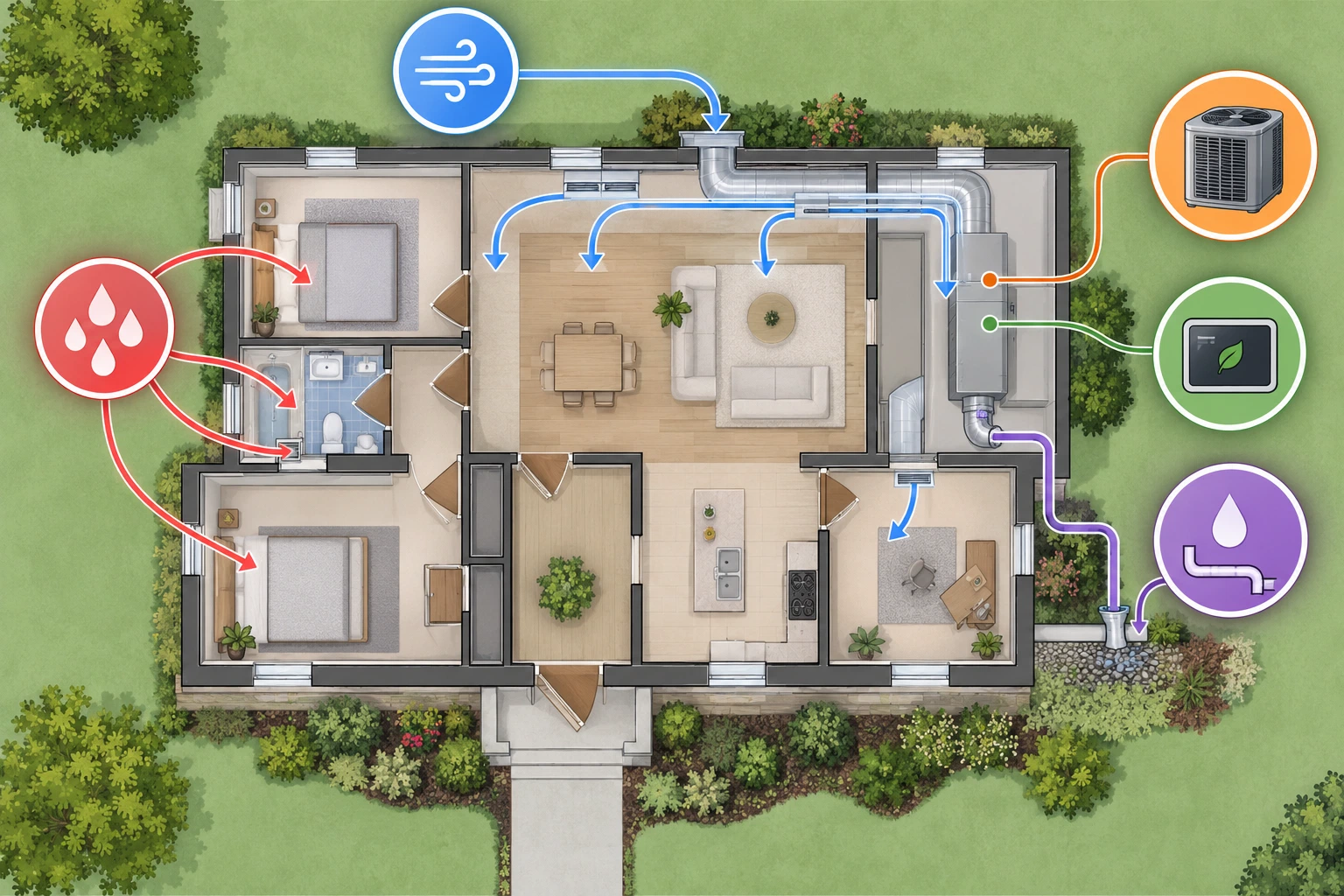
Ventilation and cooling should be coordinated. Bringing in outdoor air can be important for indoor-air needs, but in hot-humid weather it can increase the moisture the cooling system must manage. A heat-pump indoor unit that recirculates room air is not automatically a fresh-air ventilation system. Ask how outdoor air is supplied, how condensate is removed, and what checks confirm the system is operating as designed.
Maintenance matters too. ENERGY STAR recommends contractor pre-season check-ups each year for central heating and cooling equipment, with cooling checks in spring. Its typical check-up includes inspecting the condensate drain in a central heat pump when it is in cooling mode; a plugged drain can cause water damage and affect indoor humidity. The checklist does not specify a separate drain-cleaning interval or a homeowner repair method. Follow the installed equipment’s maintenance instructions and seek qualified service for persistent leakage (ENERGY STAR maintenance checklist).
Questions to take to a cooling assessment
Ask a qualified HVAC professional to explain:
- How the room-by-room cooling loads and moisture sources were estimated.
- How outdoor-air ventilation and infiltration affect the summer design.
- Whether the equipment can operate long enough and at a low enough capacity to manage humidity during mild or part-load conditions.
- How controls, airflow, filters, and condensate drainage will be set up and checked.
- What additional dehumidification options exist if the calculated design and commissioning checks show a gap.
Do not infer that one heat-pump type guarantees a particular indoor humidity or that a home needs a specific device from a thermostat reading alone. Persistent dampness or comfort problems call for a qualified assessment of the equipment and the building. For room-by-room coverage, see Do ductless heat pumps cool a whole home?. For air sealing and fresh-air planning, see Does an older home need more ventilation after air sealing?.
Sources and further reading
- Home Cooling (primary source)
- Evaluating Moisture Control of Variable-Capacity Heat Pumps in Mechanically Ventilated, Low-Load Homes in Climate Zone 2A (primary source)
- Low-Load Heating, Dehumidification, and Air-Conditioning (HDAC) Comfort System (primary source)
- Maintenance Checklist (primary source)