 HeatPumpPath
Safety Checks Before Air Sealing an Older U.S. Home
Before air sealing or insulation work, learn which indoor-air, lead-paint, asbestos, radon, and belowground-contaminant questions a U.S. homeowner may need qualified help to resolve.
In this guideJump to a section
Air sealing can help make a home more comfortable, but the work should be planned with ventilation, moisture, fuel-burning equipment and any materials that may be disturbed. In a U.S. home, the right pre-work questions depend on the age and condition of the building, the proposed work and local requirements. This guide is a prompt for assessment, not a diagnosis or do-it-yourself testing procedure.
Start with a whole-house assessment
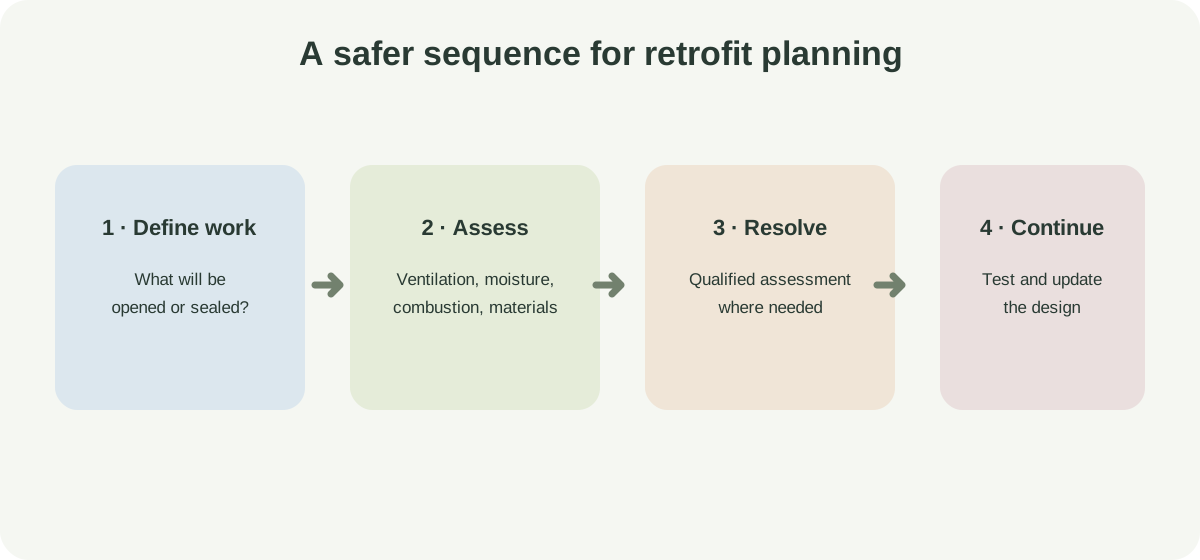
Tell the energy assessor or contractor what work is proposed and which materials it may disturb. Share known renovation history, previous inspection reports, moisture or odor concerns, and information about fireplaces, furnaces, water heaters or other fuel-burning appliances. Air sealing changes uncontrolled air movement; EPA advises that retrofit planning account for ventilation, combustion venting, pollutants and moisture rather than treating tightness as the only goal.
Ask who will assess ventilation and combustion safety, and how the work will be sequenced if a concern is found. Do not block vents, modify a flue, open a wall or test a combustion appliance yourself as a substitute for qualified review.
When older materials may be disturbed
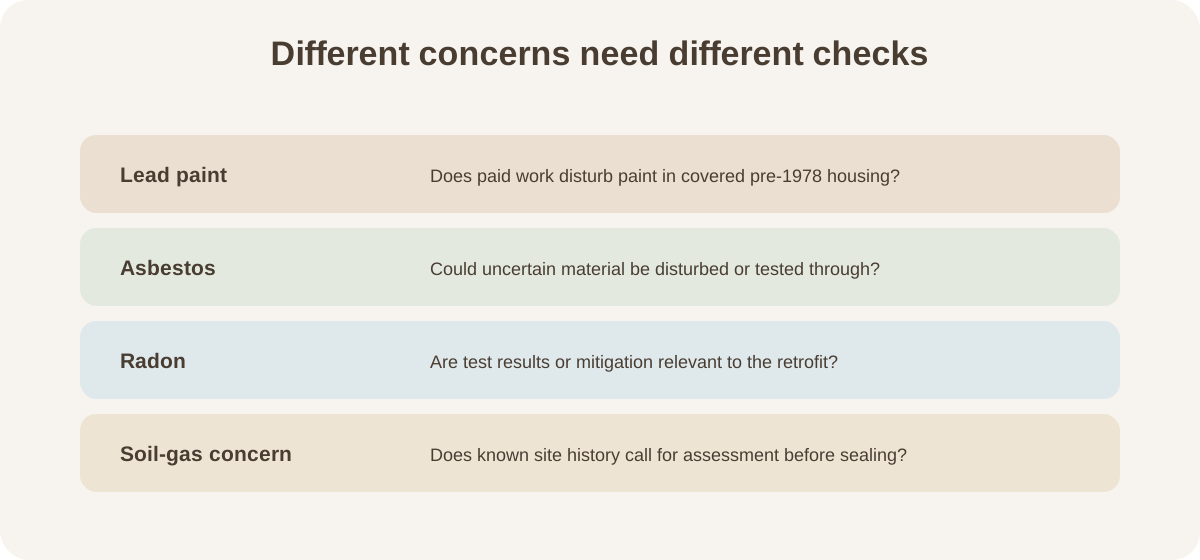
Homes built before 1978 may have lead-based paint. EPA’s Renovation, Repair and Painting (RRP) Rule applies to paid work that disturbs painted surfaces in covered pre-1978 housing and child-occupied facilities; covered firms must be certified and workers trained in lead-safe practices. The rule generally does not apply to a homeowner doing work in their own home, but EPA lists exceptions, including renting part of the home, operating in-home child care, and renovating and selling for profit. This is a federal program summary, not a determination that paint contains lead or that a specific job is covered. Ask the contractor which administrator and requirements apply to the actual work.
Potential asbestos-containing materials can occur in some older-home insulation, flooring, roofing or siding, textured finishes, heating equipment and ducts. Age and appearance do not prove that a material contains asbestos. If uncertain material could be disturbed, ask a qualified asbestos professional to assess it before work. EPA’s energy-upgrade guidance says not to disturb suspected material that is intact and need not be disturbed; if it is damaged or must be disturbed, keep people away from the affected area and contact an asbestos professional about appropriate next steps. Its protocol also calls for asbestos repair or abatement to precede blower-door testing and advises against duct-leakage testing on asbestos-insulated ducts.
Radon and belowground contaminants
EPA identifies radon testing and mitigation as an opportunity that can be missed during home-energy upgrades. That does not establish that a particular heat pump or air-sealing project will raise radon, nor does it show that every home needs the same test. If the property has radon test results, an existing mitigation system or questions about testing, raise them with the retrofit assessor and consult current EPA or state guidance before work begins.
A different concern applies when a home is in a known contaminated area or has unexplained fuel-like or sewer-gas odors. EPA’s single-family energy-upgrade protocol recommends further assessment before air sealing where soil or groundwater contamination could create vapor intrusion. It treats this as a condition-specific handoff, not a reason to suspect every home. Contact the relevant environmental authority or a qualified professional; do not try to diagnose the source by smell.
Put the checks in the work plan
- What materials will be opened, drilled, removed or sealed?
- Are any ventilation, moisture, combustion or indoor-air questions unresolved?
- Could lead paint or asbestos-containing material be disturbed, and who will confirm the applicable requirements?
- Is radon testing or existing mitigation relevant to this project?
- Does site history or a specific odor warrant an environmental assessment before sealing?
- Which assessments or specialist work must be completed before blower-door or duct testing?
Keep the findings with the retrofit scope so the heat-pump designer knows which work is planned and which assumptions remain open. For the broader relationship between insulation and system design, see insulation and air sealing before a heat pump. This article covers U.S. EPA guidance only; requirements and programs differ in the UK and Canada.
Sources and further reading
- Energy, Weatherization and Indoor Air Quality (primary source)
- Lead Renovation, Repair and Painting Program (primary source)
- Energy Savings Plus Health: Indoor Air Quality Guidelines for Single-Family Building Upgrades (primary source)