 HeatPumpPath
Heat Pumps in Ontario: Weather, Rates, and Incentives
Find Ontario weather and electricity information for your location, then check current heat-pump program rules before work begins.
In this guideJump to a section
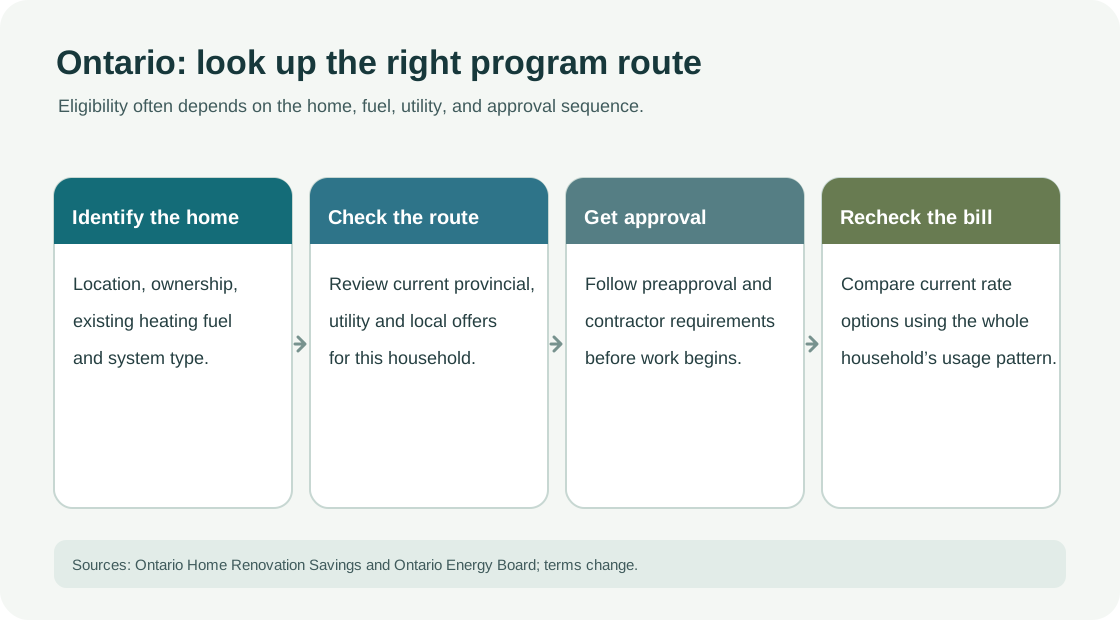
Ontario is too large for one city’s weather, utility, electricity plan, or rebate to answer every homeowner’s question. Start with the address, identify the nearest useful climate station and local electricity distributor, then check the current program route for the home’s primary heating fuel. None of those lookup steps replaces a heat-loss calculation or a project-specific design.
Use climate information for context
Canadian Climate Normals summarize conditions over a defined period at a named station. Record the station and period when comparing locations, and distinguish averages from extremes, current weather, and the outdoor design condition used by an installer. A station on the other side of a lake, at a different elevation, or in a different part of a large municipality may not describe your property’s exposure.
Ask the designer for the heating-load method and local outdoor design condition used in the proposal. The equipment schedule should show delivered capacity at low outdoor temperatures, the expected contribution from backup, and whether existing radiators, ducts, or baseboards can meet the room loads. Weather normals help describe a region; they do not tell you how much heat a particular house loses.
Compare the electricity plan you actually use
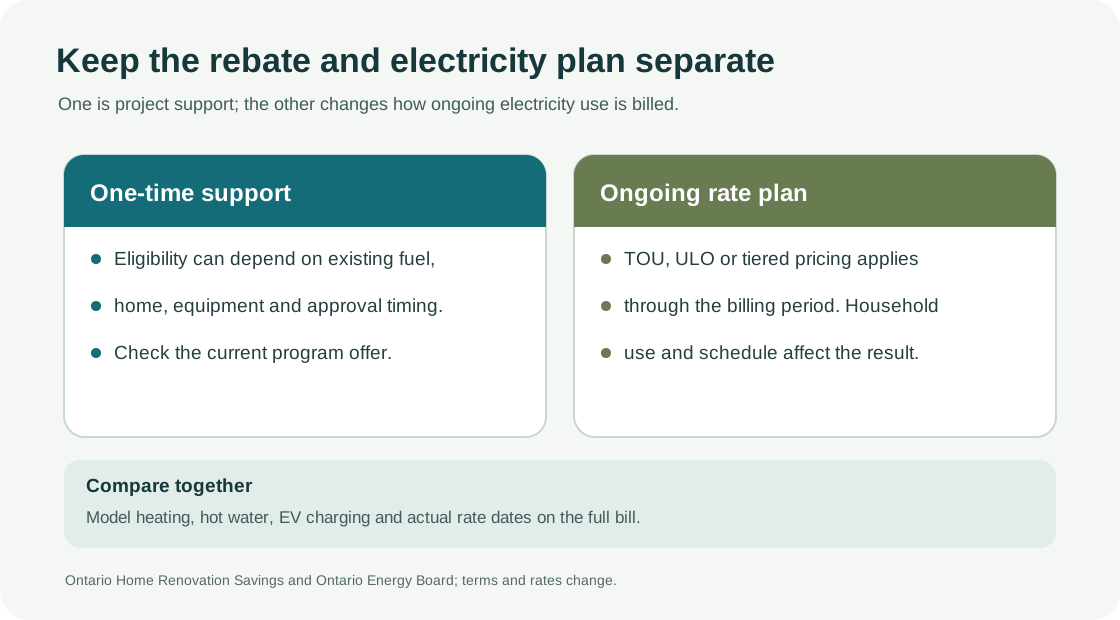
The Ontario Energy Board lists Time-of-Use, Ultra-Low Overnight, and Tiered regulated price plans for eligible customers. TOU and ULO depend on when electricity is used; Tiered depends on the amount used in a month. The OEB sets these prices on an annual cycle, with a rate change each 1 November. A retailer contract follows a different price arrangement.
The posted energy price is not the whole bill. Delivery charges, taxes, the household’s plan, meter eligibility, and the heat pump’s hourly use all affect cost. Use the current OEB table and your own bill rather than copying an old rate into a savings estimate. A tariff comparison also needs a realistic heating load and seasonal system performance; a single efficiency label cannot predict the bill.
Check the current heat-pump program route
The Home Renovation Savings program currently routes rebates by the home’s primary heating source and account context. Its live heat-pump page lists different air-source and ground-source offers for Enbridge natural-gas customers and for homes primarily heated with electricity, oil, propane, or wood. The page was checked on 29 October 2026; amounts and eligibility can change. Its current instructions say pre-approval is mandatory and installation before approval is ineligible. Confirm the product, contractor, utility, application sequence, and exact project eligibility directly with the program before work.
Ontario ground-source projects have a separate before-drilling approval path. Loop type, depth, wells, groundwater use or discharge, municipal rules, and source-water conditions can change the questions. See the Ontario ground-source approvals guide and have the designer identify which authority must confirm each part of the project.
Sources checked 29 October 2026: Environment and Climate Change Canada climate normals, Ontario Energy Board electricity rates, and Home Renovation Savings heat-pump rules.
Sources and further reading
- Canadian Climate Normals 1991–2020 (primary source)
- Electricity rates (primary source)
- Home Renovation Savings heat-pump rebates (primary source)