 HeatPumpPath
A Heat Pump After a Flood: What to Know Before Using HVAC
EPA guidance says not to use HVAC affected by floodwater to dry a home. Learn what the guidance covers, what it does not establish about restart, and what to ask a professional.
In this guideJump to a section
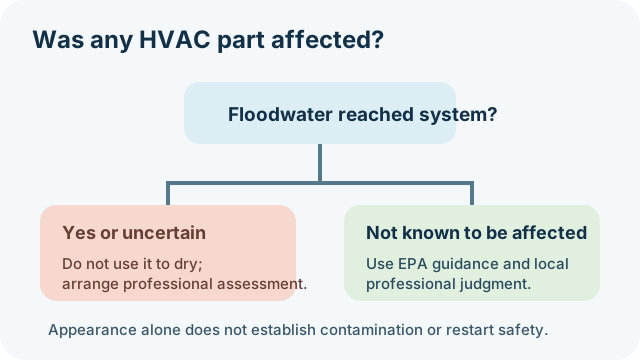
Floodwater can affect more than the visible outdoor unit. A home HVAC system may include an indoor air handler, controls, ducts, drains, wiring, and other components. If any part of the system was affected, do not use it to help dry the home. The U.S. Environmental Protection Agency (EPA) says that cleaning and drying an affected HVAC system can be complicated and recommends having a professional do it.
What counts as an affected system
EPA’s wording covers any part of the HVAC system affected by floodwater; it does not give a water-depth threshold or a list of components that an owner can clear for use. Do not assume a system is unaffected because the outdoor unit looks dry, because the water did not reach the thermostat, or because the home’s electrical power is available. The source does not provide a homeowner inspection procedure for wet electrical or mechanical equipment.
If you are unsure whether floodwater reached any part of the system, treat that uncertainty as a question for a qualified professional. Do not open equipment or enter a flooded area to investigate a unit, disconnect, or duct. Follow local flood-reentry instructions and do not put yourself at risk to collect information.
Ask for assessment before relying on the system
Tell the HVAC professional which components may have been exposed, when the water reached them, whether the system was operating, and whether there are visible messages or changes. Ask what cleaning and drying are needed, which components are included in the assessment, and what would establish that normal use can resume. Keep any inspection or service record with the equipment manual and warranty.
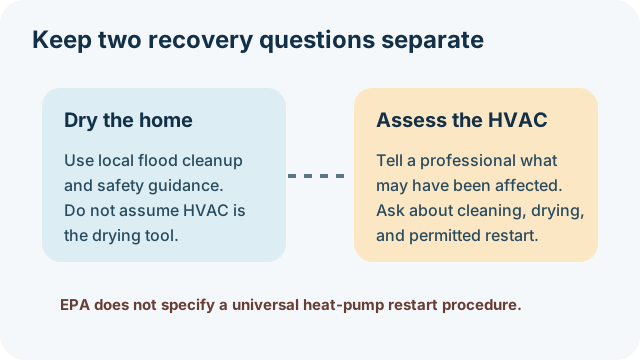
The EPA page does not define a heat-pump-specific cleaning method, flood-height rule, replacement threshold, or restart procedure. It also does not say that every exposed unit must be replaced. A professional needs to assess the affected equipment and explain the applicable next step; this guide cannot determine damage or provide permission to restart.
Do not confuse home drying with HVAC clearance
Drying a building and evaluating its heat pump are separate tasks. EPA’s flood-cleanup guidance discusses the HVAC question separately from general drying methods. If the HVAC system was affected, do not use it to dry the home while arranging assessment. For a system that is working and not contaminated, EPA says it may help with drying, but high humidity may require other equipment as well. That statement does not let an owner determine contamination from appearance alone.
Do not improvise with portable generators, electrical equipment, or temporary wiring around floodwater. Follow local emergency and utility direction. If the HVAC professional identifies contamination, use the appropriate qualified service provider for cleaning and drying; the EPA source does not provide the technical steps.
For routine post-install records and service information, see the homeowner maintenance checklist. For flood-prone-home planning before an event, seek local flood and building guidance; this page addresses only use of an affected HVAC system during recovery.
Source and scope
The EPA flood-cleanup page is general U.S. residential guidance, not a heat-pump service manual. Its HVAC boundary applies when a heat pump is part of the affected system. It does not establish whether a specific system is damaged, safe to operate, or ready to restart.
Sources and further reading
- Flood Cleanup to Protect Indoor Air and Your Health (primary source)